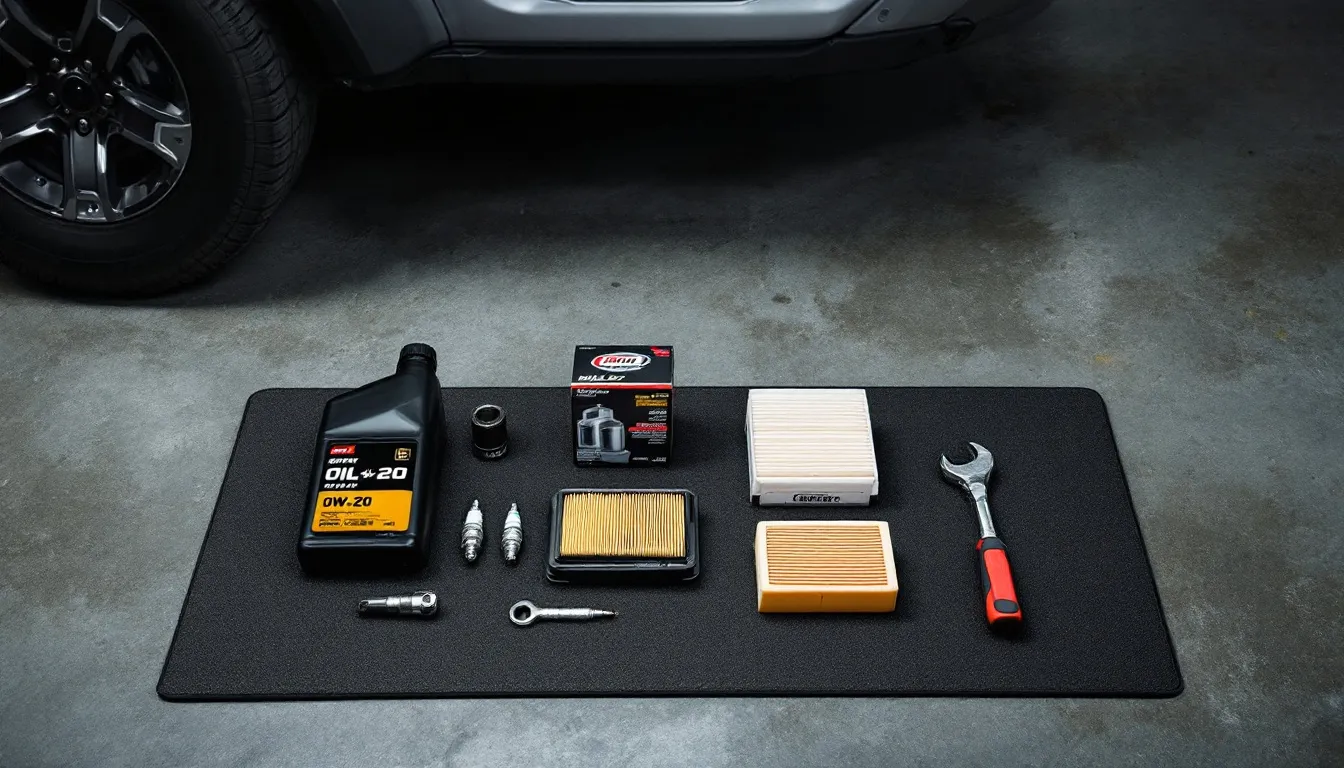
Your Jeep Wrangler JL maintenance schedule is built on factory intervals that vary significantly across three distinct powertrains: the 3.6L Pentastar V6, the 2.0L turbocharged four-cylinder, and the 4xe plug-in hybrid. Skip the wrong intervals and you'll pay for it. Follow the right ones, and your JL will run reliably for years of both highway and trail work.
The issue is that most owners follow intervals that don't actually match their driving. A Rubicon doing monthly trail runs is on a different schedule than a Sport driven only on pavement. A 4xe owner who charges every night lives a different maintenance reality than someone racking up highway miles. This guide covers every interval by engine and driving style, with honest guidance on what you can DIY and what needs a shop.
All specifications here come from manufacturer documentation, service manual data, and owner consensus from forums and technical bulletins.
Oil Change Intervals by Engine: 3.6L, 2.0T, and 4xe
Oil changes form the foundation of any JL maintenance plan. Intervals range from 5,000 to 10,000 miles, but the number depends entirely on which engine you're running.
3.6L Pentastar V6
Jeep specifies 0W-20 full synthetic for the 3.6L. The Oil Life Monitor (OLM) handles the intervals, typically triggering between 7,000 and 10,000 miles under normal driving. The 3.6L is a naturally aspirated engine that handles extended intervals reasonably well when you use genuine full synthetic and keep driving conditions genuinely normal.
The OLM is not a chemical sensor. It's an algorithm that factors in engine revolutions, temperature cycles, cold starts, and load. For average highway and suburban driving, it works reliably. For frequent short trips, cold-weather starts, or any pattern outside the normal band, the monitor can misread how fast your oil is actually degrading.
2.0L Turbocharged Four-Cylinder
The 2.0T picture is more complicated. Jeep officially specifies 0W-20 full synthetic and relies on the OLM, which can suggest intervals up to 10,000 miles. Many 2.0T owners and independent technicians don't trust that limit. Turbocharged engines produce intense heat at the bearing journals, and the turbo itself continues to soak heat after shutdown, which degrades oil faster than the OLM algorithm accounts for.
Owner consensus across JL forums generally caps 2.0T changes at 5,000-7,500 miles for regular driving, and closer to 5,000 for anyone doing consistent highway pulls, frequent short trips, or off-road work. Some owners track this meticulously; others check their oil between fill-ups and change early if they're seeing consumption.
A secondary concern: some 2.0T examples show measurable oil consumption between changes, especially as mileage climbs. Check your level at every fuel stop if you're pushing toward a longer interval.
4xe (2.0T + Electric Motor)
The 4xe runs the same 2.0T engine and takes the same 0W-20 full synthetic. But the electric motor changes when you actually need to change the oil. If you're charging regularly and driving in EV mode for short trips, your combustion engine accumulates fewer operating hours per calendar year. The OLM responds by showing longer remaining life. That's a trap. Jeep's documentation specifies a maximum one-year interval regardless of mileage. Do not skip an annual change based on the monitor.
Full JL Service Schedule: Every Interval at a Glance
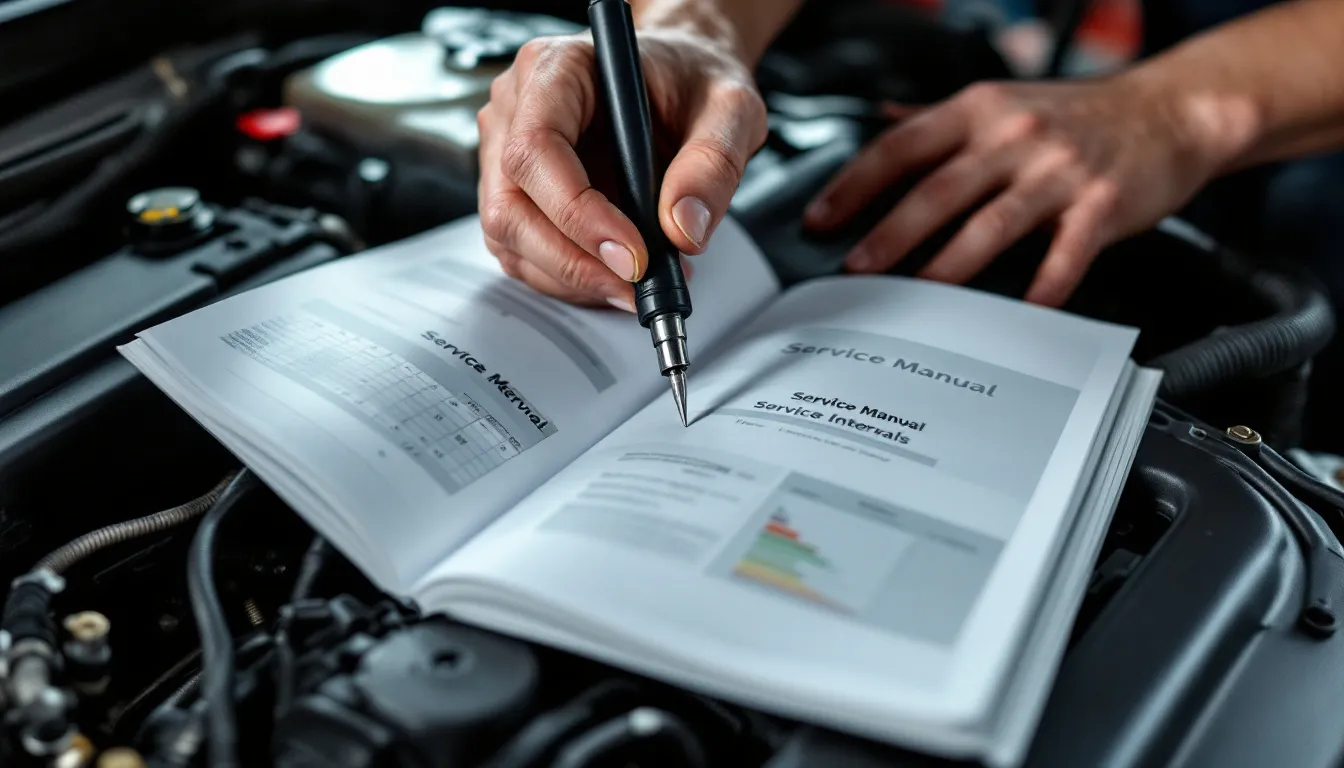
The complete Jeep Wrangler JL service schedule runs from every oil change out to 150,000-mile drivetrain fluid replacements. The table below pulls factory documentation together with well-documented owner and forum consensus where the factory underspecifies. Severe duty is defined in the section following this table.
| Service Item | Interval (Normal) | Interval (Severe Duty) | Notes |
|---|---|---|---|
| Engine oil & filter (3.6L) | OLM / max 10,000 mi | 5,000-7,500 mi | 0W-20 full synthetic |
| Engine oil & filter (2.0T / 4xe) | OLM / max 10,000 mi | 5,000 mi | Many owners cap at 7,500 mi under normal use |
| Tire rotation | Every 5,000-7,500 mi | Every 5,000 mi | More critical with larger aftermarket tires |
| Engine air filter | 30,000-45,000 mi | 15,000-20,000 mi | Shorten significantly for dusty/trail use |
| Cabin air filter | 15,000-25,000 mi | Every 12,000 mi | Easy DIY; often neglected |
| Spark plugs (3.6L) | 60,000 mi | 30,000-45,000 mi | OEM iridium plugs specified |
| Spark plugs (2.0T) | 30,000-45,000 mi | 20,000-30,000 mi | Turbocharged engines foul plugs faster |
| Automatic transmission fluid (8HP75) | 60,000 mi (severe) / "lifetime" | 30,000-45,000 mi | ATF+4; "lifetime" fluid is marketing, not engineering |
| Transfer case fluid (NV241) | 60,000 mi | 30,000 mi | Dana Trac II fluid or equivalent |
| Front axle fluid (Dana 44) | 30,000-45,000 mi | 15,000-20,000 mi | 75W-90 GL-5 full synthetic |
| Rear axle fluid (Dana 44) | 30,000-45,000 mi | 15,000-20,000 mi | Limited-slip additive required on Trac-Lok axles |
| Brake fluid | Every 2-3 years | Every 1-2 years | Moisture absorption in hydraulic fluid |
| Coolant (OAT) | 5 years / 100,000 mi | 3 years / 60,000 mi | Organic Acid Technology; do not mix types |
| Serpentine belt | Inspect at 60,000 mi | Inspect at 45,000 mi | Replace at first sign of cracking or glazing |
| 4xe high-voltage battery coolant | Per dealer service | N/A | Dealer-only; do not service independently |
| 4xe brake fluid | Annual minimum | Annual | Regenerative braking reduces wear but not fluid aging |
| Fuel filter (2.0T) | Inspect at 30,000 mi | 20,000-30,000 mi | Integrated in fuel pump module |
What "Severe Duty" Actually Means
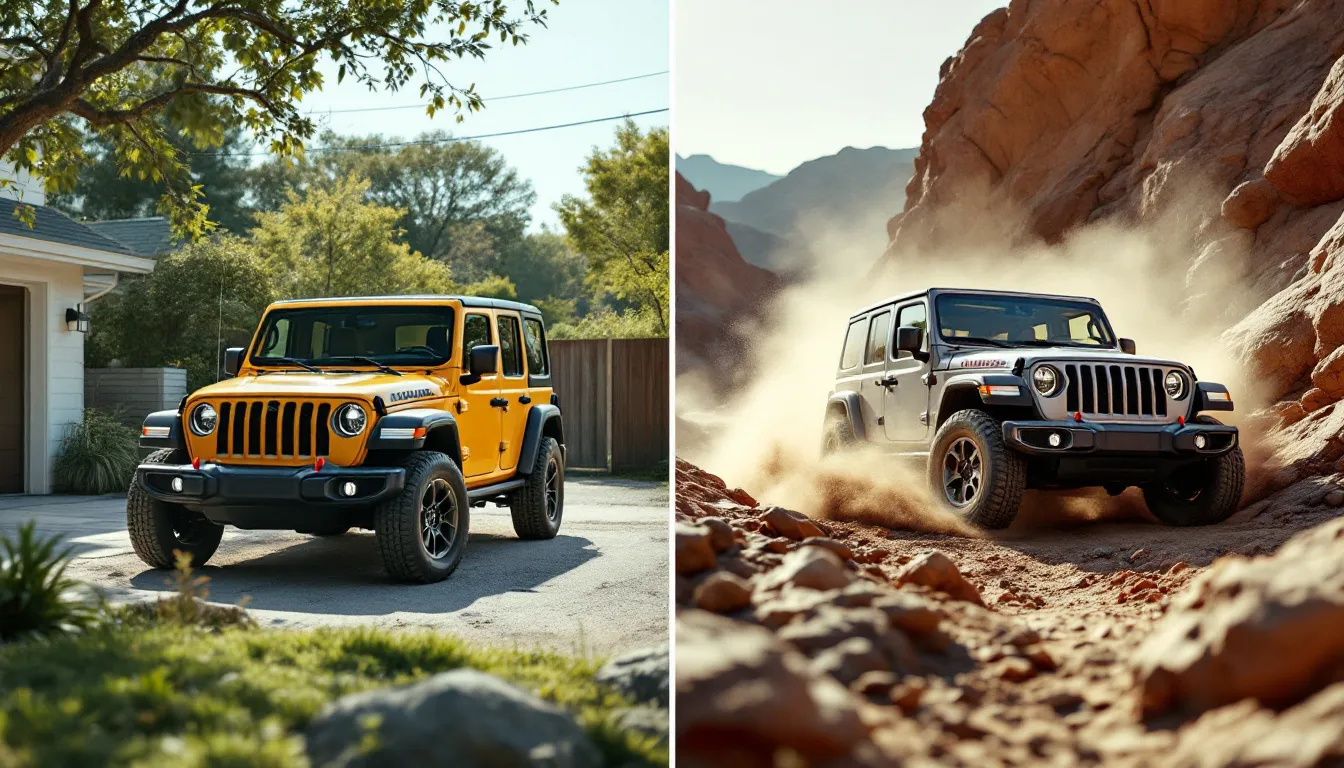
Severe duty is not just off-roading on the weekends. Jeep defines it as any combination of frequent short trips under 10 miles, extended idling, towing or hauling at maximum ratings, operation in extreme temperatures, sustained dusty or muddy conditions, or regular off-road use with rock crawling, water crossings, or sand.
A Rubicon that sees the trail monthly qualifies. So does a Sport towing a boat every summer weekend. So does a Sahara in a cold climate where you make frequent short trips in winter.
Most JL owners are on the severe-duty schedule and don't realize it.
Rubicon Owners Running Tru-Lok Lockers
If you're running the factory electric lockers, change your front and rear axle fluids closer to the severe-duty schedule regardless of your overall driving profile. The locker mechanism adds wear debris to the fluid faster than open differentials, and degraded fluid can affect engagement reliability. It's the kind of thing that won't show up until you really need the locker to work.
Transmission, Transfer Case, and Axle Fluids: The Drivetrain Picture
The drivetrain fluids in your JL are the items most often skipped, most often damaged by off-road use, and most expensive to ignore. Each system has specific requirements you need to understand before you build out your maintenance budget.
8HP75 Automatic Transmission
The ZF 8HP75 eight-speed automatic in your JL is an excellent gearbox. It uses ATF+4 and is sometimes listed as having a "lifetime fill" in the service documentation. That phrase needs context. Lifetime means normal on-road use under controlled conditions. Water ingestion through the vent (common on deep water crossings), heat from towing, and the mechanical loads of rock crawling all degrade ATF+4 faster than the factory cycle assumed.
Jeep's service schedule puts the first transmission fluid change at 60,000 miles for severe use. Many experienced off-road technicians recommend pulling a sample at 30,000-45,000 miles on a wheeled Rubicon and inspecting the fluid color and smell. Dark brown or burnt-smelling fluid means change it immediately. Cherry-red clear fluid with no metallic smell means you have room to go further.
NV241 Transfer Case
Both the Rock-Trac (in Rubicon) and the Command-Trac (in Sport and Sahara) require their own specific fluids. Check your owner's documentation for the exact spec; using the wrong fluid causes shift quality issues and can wear the synchronizers. Factory guidance suggests 60,000 miles under normal use. Owners doing regular water crossings often drop this to 30,000 miles or less.
Dana 44 Front and Rear Axles
Both the front and rear Dana 44s take 75W-90 full synthetic GL-5 gear oil. If your Wrangler has the Trac-Lok rear limited-slip differential (standard on Sahara and Rubicon), you need to add the correct friction modifier additive at each fluid change. Skip the additive and you'll get chatter on turns, which owners often initially mistake for a driveline vibration problem.
On the Rubicon front axle, the Tru-Lok electric lockers use the same axle oil as lubricant for their locking mechanism. Contaminated or degraded fluid slows down locker engagement or prevents it from locking fully.
After any river crossing deeper than the axle vents, consider pulling the differential covers within a few days and inspecting for emulsified (grey, milky) fluid. Water in the gear oil destroys bearings quickly and defeats the entire point of investing in quality components.
Spark Plugs, Air Filters, and Ignition Work
Spark plugs and filters are the service items owners often handle correctly in the first 30,000 miles, then forget entirely. Each engine has distinct requirements.
3.6L Spark Plugs
The 3.6L Pentastar uses iridium-tipped spark plugs with a factory-specified interval of 60,000 miles under normal conditions. This is realistic for a naturally aspirated engine running quality fuel. Severe-duty use (lots of idling, consistent low-speed rock crawling, short trips in cold weather) shortens this to 30,000-45,000 miles. Misfires on a 3.6L with high-mileage original plugs are a common diagnosis on owner forums; it's an easy fix that typically also restores lost fuel economy.
2.0L Turbo Spark Plugs
The 2.0T is harder on plugs. Turbo heat, higher combustion pressures, and the direct injection setup mean most technicians suggest not pushing past 30,000-45,000 miles. Many 2.0T owners who watch their oil change intervals closely also keep a closer eye on plug condition. It's a practical pairing.
Engine Air Filter
The factory paper air filter runs 30,000-45,000 miles under normal conditions, but "normal" doesn't include dusty trail work. Anyone running regular off-road routes should inspect the filter every 10,000-15,000 miles and replace on condition rather than mileage.
One specific caution: if you run an oiled aftermarket filter (K&N or similar), the filter requires periodic re-oiling and cleaning rather than replacement. Over-oiling these filters has caused mass airflow sensor contamination on some JL examples. Follow the filter manufacturer's instructions precisely and allow adequate drying time after re-oiling.
Cabin Air Filter
The cabin air filter is straightforward DIY work. Location varies slightly by model year and trim but is generally behind the glove box or accessible from under the dash. Factory recommendation is 15,000-25,000 miles, but if you run with doors off in dusty conditions (very common), inspect it annually and replace when visibly fouled.
Jeep Wrangler 4xe Maintenance: What's Actually Different
The 4xe maintenance schedule shares most of its structure with the standard JL but adds hybrid-specific service requirements that don't apply to the V6 or 2.0T.
Oil Changes: The Calendar Problem
The 4xe uses the 2.0T engine and requires the same 0W-20 full synthetic. The complication is usage pattern. If you charge regularly and drive primarily on electric power for short commutes, your combustion engine accumulates fewer operating hours per calendar year than a conventional JL. The OLM will show a higher remaining life percentage. Jeep's service documentation, however, specifies a maximum 12-month interval regardless of what the monitor displays. Follow the calendar, not just the monitor.
High-Voltage Battery Service
The 4xe's 17 kWh high-voltage lithium-ion battery is not a DIY service item. Battery diagnostics, cooling system checks, and any work involving the HV circuits require a dealer technician with appropriate safety certification and tooling. Jeep specifies dealer-level inspection of the battery system as part of scheduled service. From owner reports and manufacturer documentation, the battery cooling circuit uses separate coolant from the engine; that coolant requires inspection and eventual replacement on a schedule specific to the 4xe service manual.
Regenerative Braking and Brake Pads
The 4xe's regenerative braking is one genuinely positive maintenance consequence. The electric motor handles a significant share of deceleration, particularly at moderate speeds. Owners report that pad wear is noticeably lower than on a comparable non-hybrid JL. Brake fluid aging is not affected by regenerative braking; moisture absorption continues on a calendar basis, so Jeep's guidance on annual brake fluid inspection applies.
The 4xe Transmission Note
The service manual indicates the 4xe uses the same 8HP75 transmission as the standard 2.0T, with the same ATF+4 specification. The hybrid drive unit (front electric motor and associated components) is a dealer-service item. Do not attempt to drain or refill the eDrive unit fluid yourself.
eTorque Mild-Hybrid Maintenance: What the 3.6L eTorque System Adds
The 3.6L eTorque system adds a belt-starter-generator (BSG) and a 48-volt lithium-ion battery to the standard Pentastar. The additional service requirements are modest but worth understanding. This section is drawn from manufacturer documentation and technician reports.
The BSG replaces the conventional alternator and starter with a single unit driven by the accessory belt. It handles stop-start operation, provides mild torque assist during acceleration, and regenerates power during deceleration. From a service standpoint, the accessory belt on an eTorque 3.6L carries more load than on a standard Pentastar because the BSG draws significant mechanical effort during generation. Inspect the belt earlier than the standard interval; many technicians suggest first inspection at 45,000 miles rather than 60,000.
The 48V battery in the eTorque system is not a DIY service item. A dealer can inspect the battery and BSG for state of health, but Jeep does not publish a specific replacement interval for the 48V battery under normal use. It's a monitor-and-replace-on-condition item. Owners report the 48V system integrates well with the standard JL electrical architecture and generally doesn't produce additional fault codes under normal use.
Beyond the belt and the 48V battery, the eTorque 3.6L follows the same service schedule as the non-eTorque Pentastar: same oil spec, same plug interval, same fluid requirements.
Normal vs Severe-Duty Service: Which Schedule Are You Actually On?
Most JL owners are on the severe-duty schedule and don't know it. Jeep's definition of "normal" service is narrower than it sounds.
Severe duty applies if your driving regularly includes any of the following:
- Short trips shorter than 10 miles, especially in cold weather
- Extended idling (frequent traffic, warm-up idling in cold climates)
- Towing or hauling at or near the rated maximum
- Sustained operation above 90°F ambient temperature
- Regular off-road use: rock crawling, water crossings, sand, mud
- Dusty or unpaved road driving
- Police, emergency, or commercial use
A Rubicon that goes on a trail run once a month is unambiguously on the severe-duty schedule. A Sport used as a daily driver in a cold climate with lots of short trips is also on it. A Sahara driven mostly on the highway in a temperate climate is the rare case where the normal schedule actually applies.
What Severe Duty Costs as a DIY Owner
Running the severe-duty fluid change schedule adds real cost compared to following "lifetime" marketing. A single severe-duty fluid service cycle covering both axles, the transfer case, and transmission might run you somewhere in the $150-$300 range in fluids and gaskets if you do it yourself, depending on current fluid pricing and whether you source OEM or quality aftermarket spec fluids. That estimate is not a precise quote; actual costs vary with location, sourcing, and model year. Budget for it and do not skip it because the factory documentation says "lifetime."
DIY vs Dealer Service: What You Can Do Yourself
Most routine JL maintenance is within reach for a competent DIY owner. Some items genuinely require dealer-level equipment or carry safety risks that make them shop work.
DIY-Friendly Tasks
- Engine oil and filter changes
- Cabin air filter replacement
- Engine air filter replacement and inspection
- Spark plug replacement (3.6L is more accessible than 2.0T)
- Tire rotation (note: skid plates add a step)
- Differential and transfer case fluid drain and refill
- Brake pad inspection and replacement
- Coolant top-off and visual inspection
On tire rotation: if you have a lift kit installed, verify your torque specs on the lug nuts and check that the lift hasn't altered your wheel offset in ways that affect rotation pairing. Choosing the right tires for your JL matters here too. Check out the guide to best all-terrain tires for the JL for rotation and sizing guidance that accounts for aftermarket fitments.
Dealer or Shop Recommended
- 4xe and eTorque 48V battery diagnostics and replacement
- 4xe eDrive unit fluid service
- Transmission fluid change (requires specific fill procedure; easy to under-fill)
- Any work requiring Jeep's StarSCAN or wiTECH diagnostic tooling
- Throttle body relearn procedure after 2.0T battery disconnect
- Tru-Lok locker actuator diagnosis
The JL's CAN bus architecture means some components (throttle body, transmission, active noise cancellation on eTorque) require a module relearn after service. This isn't a reason to avoid DIY work, but it's worth knowing before you disconnect something and find the truck behaves oddly afterward. Many procedures are well-documented in the owner community; look them up before you start.
Skid plates complicate otherwise simple jobs. The factory skid plates on the Rubicon require removal for proper oil drain access on some model years. Factor in the extra time.
What JL Maintenance Actually Costs: Budgeting by Interval
JL maintenance costs vary significantly between DIY and dealer service, and between the standard JL and the 4xe. The figures below are based on owner-reported costs and commonly available parts pricing; treat them as planning ranges, not firm quotes.
Oil Changes
A DIY oil change on the 3.6L (using quality full synthetic 0W-20 and a factory-spec filter) typically runs $40-$60 in materials. The 2.0T uses slightly less oil by volume but the cost is comparable. Dealer pricing for an oil change on a JL generally runs $80-$130 depending on region and dealership.
Drivetrain Fluids
A full drivetrain fluid service (both Dana 44 axles, transfer case) done DIY runs roughly $80-$150 in fluids. Adding transmission fluid brings that to $150-$250 depending on how much ATF+4 your drain-and-fill procedure recovers. Dealer pricing for the same service is typically $400-$700 or more.
Spark Plugs
A set of OEM-spec iridium plugs for the 3.6L (six plugs) costs roughly $40-$70 in parts. Labor at a dealer adds $80-$150. The 2.0T is four plugs but the turbo intake routing makes access slightly more involved than on the V6.
4xe-Specific Items
Dealer pricing for 4xe-specific service items (HV battery inspection, battery coolant service) varies significantly between dealerships. Owners report wide pricing swings. Budget for it as a variable. If you're considering major platform decisions for your JL, the Jeep Wrangler 392 engine swap costs article gives useful context for thinking about long-term JL cost planning.
Frequently Asked Questions: JL Maintenance Schedule
How often should I change the oil on a Jeep Wrangler JL?
For the 3.6L, follow the OLM but do not exceed 10,000 miles. For the 2.0T, many owners and technicians recommend capping changes at 5,000-7,500 miles regardless of what the monitor shows, due to turbo heat loading. The 4xe follows a one-year maximum interval regardless of OLM reading.
What oil does a 2.0L turbo JL take?
The 2.0T requires 0W-20 full synthetic engine oil. Jeep specifies API SN or better, and the capacity is approximately 5 quarts with filter. Do not use conventional oil in the 2.0T.
Does the Jeep 4xe need different maintenance than a regular JL?
Yes. The 4xe adds high-voltage battery inspections (dealer only), a separate battery cooling circuit, and an annual oil change minimum regardless of mileage. Regenerative braking also means slower brake pad wear, though brake fluid still ages on a calendar basis.
What is the spark plug interval on a JL Wrangler?
The 3.6L V6 uses iridium plugs with a 60,000-mile factory interval under normal use; severe-duty shortens this to 30,000-45,000 miles. The 2.0T should have plugs inspected and typically replaced at 30,000-45,000 miles due to the additional stress of turbocharging.
How often should I change the transfer case fluid on a JL?
Factory guidance is 60,000 miles for normal use. Owners doing regular off-road use, water crossings, or towing should target 30,000 miles or inspect on condition after any significant water crossing. Use only the fluid spec listed in your owner documentation for your specific transfer case variant.
Can I do JL Wrangler oil changes myself?
Yes. A JL oil change is straightforward for anyone comfortable with basic mechanical work. You'll need a drain pan, the correct filter socket, and approximately 5 quarts of 0W-20 full synthetic. Rubicon models with factory skid plates require a skid plate drop for clean drain access. After the change, reset the OLM through the Uconnect system.
What does severe duty mean for a Jeep JL?
Jeep's severe-duty classification applies to any regular operation involving short trips under 10 miles, temperatures above 90°F or in extreme cold, off-road use, dusty conditions, towing near maximum capacity, or frequent extended idling. Most JL owners who use the vehicle for any mix of off-roading and short daily commutes are on the severe-duty schedule.
Keeping Your JL on the Road and the Trail
Staying on top of your Jeep JL maintenance schedule is straightforward once you understand that the three powertrain variants have genuinely different requirements. The 3.6L is the most forgiving and follows OLM guidance reliably for most users. The 2.0T benefits from a shorter oil change interval than the monitor often suggests, particularly for harder use. The 4xe adds hybrid-specific items that require dealer involvement and a calendar-based oil change floor regardless of mileage.
The severe-duty question is the one most owners get wrong. If your JL sees any regular off-road use, towing, or consistent short-trip commuting, your schedule is shorter than the factory "normal" intervals suggest. That affects your fluids, your filters, and your plugs.
Everything in this guide is drawn from manufacturer documentation, published service manual specifications, and owner and technician consensus documented across JL owner forums and technical resources. It's research-based guidance, not personal JL ownership experience.
If you're planning your JL build or want a structured way to track service intervals alongside mods and upgrades, the JL Build Planner at https://jeepjlguide.com/subscribe is worth bookmarking. It's a practical tool for keeping your build and maintenance planning in one place.
Your next natural step after getting the service side right is getting the right rubber under the JL. The guide to choosing the right all-terrain tires for your JL covers sizing, load ratings, and what actually fits at different lift heights. That kind of decision works best when the maintenance fundamentals are already sorted.