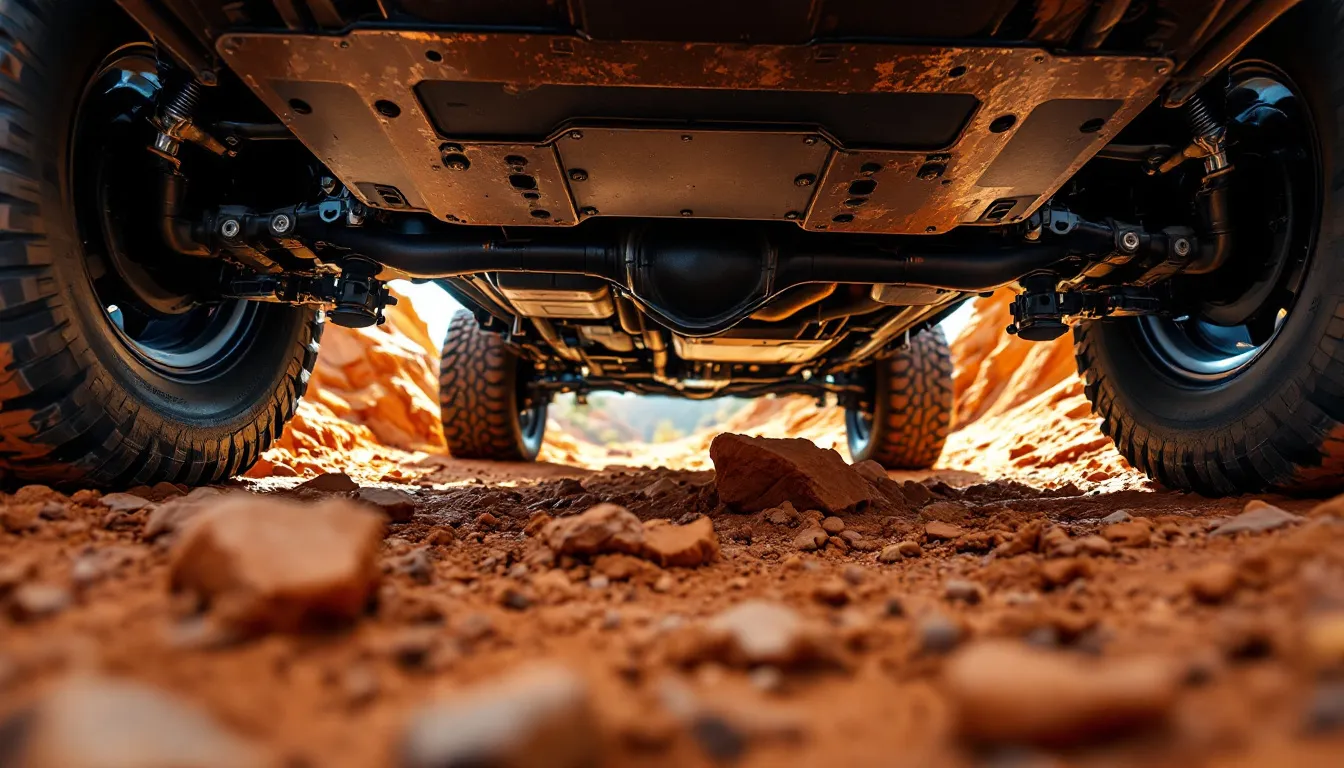
Jeep Wrangler JL skid plates are steel or aluminum panels that bolt to the frame and underbody to protect critical components from rock strikes, trail debris, and ground contact during off-road use. The short answer to whether you need them: it depends on your trim and how you actually use the vehicle.
Here's the reality: Rubicons arrive with substantial underbody protection already bolted on. Sport and Sahara models do not. On those two trims, the transfer case, gas tank, and other vital components sit exposed the moment you leave pavement. Aftermarket skid plate kits fill that gap, running anywhere from around $50 for targeted protection up to $400-plus for full-coverage systems.
One critical mistake to avoid before you spend a dollar: JK and JL skid plates are not interchangeable. The JL uses different frame geometry and mounting points. JK fitment parts will not bolt up to your JL, period. You'll see them show up in search results anyway. Double-check the fitment specs, and keep that incompatibility in mind throughout your research. For a complete picture of your JL's maintenance needs, the JL maintenance schedule is a useful reference to keep alongside this guide.
What the JL Comes With From the Factory (By Trim)
Factory underbody protection on the JL varies dramatically by trim. Rubicon gets the most; Sport and Sahara get the least, often just a single front skid with the transfer case and fuel tank left completely exposed.
Here's the actual breakdown:
Sport and Sport S: These entry-level trims ship with a basic front skid that covers the front axle area. Beyond that, you're looking at exposed underbody. The transfer case, gas tank, and rear axle components have zero factory protection.
Sahara: The Sahara adds some additional coverage compared to the Sport, but it still falls short. Owners who wheel regularly report that factory coverage leaves the transfer case and fuel tank at serious risk on anything rougher than a dirt road.
Rubicon: This is where Jeep actually invested in underbody protection. You get a front skid plate, transfer case skid, gas tank skid plate, and rock rails as standard. If you bought a Rubicon, your underbody protection is solid from the factory. That said, aftermarket options can still improve on OEM thickness and coverage if you're pushing harder terrain.
Willys Edition: The Willys falls between the Sport and Rubicon for off-road kit. It adds aggressive tires and a Trac-Lok limited-slip differential, but its skid plate coverage doesn't match the Rubicon. If you're evaluating your Willys for trail use, check out Willys edition differences from Sport for the full breakdown of what you get and what you don't from the factory.
4xe and 392: The 4xe's hybrid battery pack gets its own dedicated skid plate. The 392 comes standard with the Rubicon's full skid plate package and benefits from the same coverage.
If your JL is a Sport or Sahara and you plan any off-road use, adding protection to those exposed zones should be one of your first mods.
Steel vs. Aluminum Skid Plates: Which Material Is Right for Your JL?

Steel skid plates survive serious abuse with minimal deformation. Aluminum saves significant weight but will dent where steel only scratches. Neither is universally superior. Your actual terrain, vehicle weight, and budget determine which makes sense.
| Property | Steel | Aluminum |
|---|---|---|
| Weight | Heavy (often 2-3x aluminum equivalent) | Light (meaningful weight savings) |
| Typical Thickness | 3/16" to 1/4" common | 3/16" to 1/4" common (e.g., 6mm) |
| Impact Resistance | Deforms less on severe hits | Can dent on hard rock strikes |
| Corrosion Resistance | Requires coating; rusts if scratched | Naturally corrosion-resistant |
| Price Point | Generally lower for comparable size | Mid to high, varies by brand |
| Best For | Rock crawling, heavy impacts, serious trails | Overlanding, weight-sensitive builds, milder terrain |
Across JL owner forums, the consensus is consistent: steel wins for hard-core rock crawling where one bad hit can end your trip. Aluminum wins for overland builds where weight adds up over hundreds of miles.
One practical consideration owners raise repeatedly: a full steel underbody protection system adds 30 to 60 pounds compared to an equivalent aluminum setup. That weight sits low and centered, so it doesn't hurt handling the way a heavy roof rack does, but it's real mass you're carrying on every mile of pavement too. For a street-and-trail build with regular highway use, that difference matters.
Aluminum at 6mm (like the Quadratec modular option) performs solidly on most trail surfaces and is genuinely resistant to corrosion without extra treatment. Live in a rust-prone region? That corrosion resistance is a real advantage worth the price premium over bare steel.
What happens when a skid plate itself gets damaged? Steel skids can take a severe hit, deform slightly, and still function. A badly bent steel skid can sometimes be hammered back into rough shape trailside. Aluminum that takes a hard enough strike can crack or deform in ways that compromise coverage and may catch on obstacles rather than sliding over them. If your aluminum skid takes serious damage, replacement is usually the answer rather than repair. That's worth factoring into your material choice if you're planning aggressive terrain regularly.

Which Parts of Your JL Actually Need a Skid Plate?
Not every component underneath your JL carries equal risk. Priority matters. The oil pan and transfer case sit lowest and take the hardest impacts, followed by the fuel tank, then the rear differential and control arms. Work through that order and you'll address the highest-consequence exposures first.
A quick note on terminology: "Bash plate" and "skid plate" get used interchangeably sometimes, but they're not quite the same thing. A bash plate typically refers to front-end protection (often integrated with a bumper) designed for forward impacts. Skid plates mount flat underneath and handle impacts from below. When you're searching for front-end protection that wraps around and under, you might see both terms. What you're actually after for underbody protection is a skid plate system.
Oil Pan and Engine Skid Plate: The oil pan sits low and forward on the engine. Puncture it on the trail and your engine seizes. This is your number one priority for any Sport or Sahara owner who takes their JL off-road. Oil pan replacement on the 3.6L Pentastar involves parts and labor costs that make a quality skid plate look cheap by comparison.
Transfer Case Skid Plate: The transfer case is central and expensive. JL owners on forums like JLWranglerForums.com consistently flag transfer case damage as one of the costliest underbody failures, with rebuild or replacement costs regularly reaching into four figures. Rubicons get this from the factory. Sports and Saharas don't.
Gas Tank Skid Plate: The factory plastic fuel tank is vulnerable on unprotected trims. Rock intrusion here is a safety issue first, mechanical problem second. Aftermarket steel or aluminum tank skids address this directly.
Rear Differential and Control Arms: These take glancing hits more than direct impacts, but repeated strikes on aggressive terrain cause real damage. Lower control arm skid kits protect the attachment points where flex and rock contact happen most often.

Muffler Skid Plate: This one comes up a lot. Here's the honest take: the muffler sits higher than the transfer case or fuel tank, and trail contact with it is uncommon. A muffler skid adds protection for very aggressive, high-clearance terrain but ranks lowest in priority for most builds. If you're already running a full skid plate kit, adding muffler protection is reasonable. If you're budgeting your first purchases, address the components above first.
Best Skid Plates for the Jeep Wrangler JL: What to Buy by Coverage Zone

The best approach to skid plate shopping is matching the coverage zone to the product, then verifying JL-specific fitment before you buy. Budget, terrain, and missing factory coverage determine where you start.
Here are the products worth considering by zone, based on specs and owner-reported fitment:
Best Combo Kit (Transfer Case + Gas Tank):
This transfer case and gas tank combo covers two of your three highest-priority zones in one purchase at $229.99. It fits JLU models with the 3.6L engine from 2018-2020. The trade-off: the 2018-2020 fitment window means 2021-and-later JLU owners need to verify compatibility carefully before ordering.
Best Budget Aluminum Option:
The MTNTOPCN aluminum kit at $169.99 covers 2018-2026 JL and JLU models, which is one of the widest fitment windows available. It also fits the Gladiator JT from 2020-2026. Aluminum construction keeps weight down. The trade-off: aluminum at this price point suits moderate trail use best. Owners who regularly crawl sharp granite should consider heavier steel.
Best Premium Transfer Case Skid:
Quadratec's modular transfer case skid at $369.99 uses 6mm 5052 aluminum, which is meaningful thickness at this price. Laser-cut and press-formed construction means tight tolerances and solid fitment. It covers JLU and Gladiator JT with the 3.6L engine from 2018-2023. The trade-off: this is transfer case only, so you'll need a separate fuel tank solution. The modular design does allow future expansion.
Best for Control Arm Protection:
Rough Country's rear lower control arm skid kit at $49.95 is a targeted, low-cost add for 2018-2024 JL models. It protects the rear lower control arm mounting area from side-impact and rock-rash damage on tight trails. The trade-off: this is supplemental protection, not a full system, and Rough Country's positioning skews toward budget-to-mid trail use rather than severe rock crawling.
Front Bumper with Integrated Skid:

A front bumper with integrated skid plate handles the bash plate zone at the front of your JL in one piece. At $399.99, this 10th Anniversary front bumper and skid combination gives you forward impact protection and front-end coverage without sourcing two separate parts. The trade-off: bumper and skid integration means you're committing to a full bumper swap. Consider this only if you're already planning a front bumper upgrade.
The Compatibility Warning Every Buyer Needs to Read:
Fuel tank skid plates listed for "07-18 Jeep Wrangler" fit the JK generation, not the JL. This is exactly where fitment mistakes happen. The JK ran through 2018, and the JL started in 2018, so listings that say "07-18" or "JK" are not JL parts. If one shows up when you search for a JL fuel tank skid, check the fitment dates and generation carefully. Buying a JK skid plate for a JL is the most common and most frustrating error owners report on JL forums.
Pair your new skid plates with the right tires by reviewing best all-terrain tires for JL rock crawling to complete the capability picture.
How Skid Plate Installation Works on the JL
Most JL skid plate installs are bolt-on jobs with no welding or frame modification required. Plan for one to three hours depending on the coverage zone and whether you're reusing factory hardware or drilling new holes.
Replacing skid plates on a JL means unbolting the existing unit from frame mounting points, positioning the new plate, and torquing the hardware to spec. Jeep's service documentation specifies torque values for frame-mounted fasteners; use a torque wrench on the new skid rather than guessing by feel. Most JL frame-mounting bolts in the underbody protection zones call for torque in the 30 to 50 ft-lb range depending on bolt size and location, but verify against the spec sheet for your specific product before you start.
For Sport and Sahara owners adding skids where nothing existed before, mounting points are already present on the JL frame. Most quality aftermarket skids use these OEM mounting locations without requiring new drilling. Verify this on your specific product before ordering.
A few practical notes from owner installs documented on JL forums: apply anti-seize to mounting bolts if you're in a salt or moisture environment, since skid plate hardware sits exposed to road spray and can seize between inspections. Support the skid with a jack stand or floor jack if you're working alone on a heavy steel unit. Inspect the mounting points on the frame for existing damage before torquing down a new plate.
The Quadratec modular design deserves mention here. Modular systems are easier to install and remove in sections rather than wrestling a single large plate under the vehicle alone. That design choice means real installation convenience, and it means you can pull one section for inspection or service without removing the entire system.
For reference values during your install, check the JL service intervals and torque specs.
Are Skid Plates Actually Worth the Money on a JL?
For any JL that leaves pavement, skid plates are worth the money. The math is straightforward: an oil pan replacement on the 3.6L Pentastar runs several hundred dollars in parts and labor depending on your area. A damaged transfer case routinely pushes repair costs well past $1,500 once labor is included. A quality skid plate kit costs a fraction of either repair, and it only has to prevent one incident to pay for itself.
For street-only owners, the math is different. If your JL never leaves pavement, the weight penalty from a full steel system is real, the protection benefit is minimal, and that money goes further elsewhere. A complete steel underbody kit adds meaningful unsprung weight; that's worth acknowledging, not ignoring.
For anyone who occasionally hits dirt roads, campsite access trails, or light off-road terrain, the calculus shifts. You don't need Moab to benefit from underbody protection. A single rock on a forest service road can damage an unprotected fuel tank or oil pan.
Prioritize the transfer case and fuel tank if you're buying in stages. Those two components are the most expensive to repair and the most exposed on unprotected trims. You can add control arm skids and other protection later as budget allows.
For other practical upgrades that improve your JL's daily utility alongside trail use, the practical JL interior accessories page covers mods that complement your build.
Frequently Asked Questions: JL Skid Plates
How do you replace skid plates on a JL model?
Replacing a factory JL skid plate means unbolting the existing unit from frame mounting points, positioning the new plate, and torquing the hardware to spec. Most factory mounting points are reused with aftermarket skids, so no drilling is typically required. Use a floor jack or jack stand to manage weight if you're installing a heavy steel unit alone, and apply anti-seize to bolts in salt-prone climates.
What skid plate options are available for the front end?
Front-end skid options for the JL include standalone engine or oil pan skid plates and front bumper systems with integrated skid sections. Numerous aftermarket brands produce JL-specific front skids, but you must verify JL fitment explicitly. Many products in search results are labeled for the JK (2007-2018), which does not bolt to the JL frame.
Should an engine skid plate be added as protection?
Yes, for any JL used off-road. The oil pan sits low and forward, making it one of the most exposed components underneath. A punctured oil pan is a trip-ending failure and an expensive repair. Sport and Sahara owners especially should treat the engine or oil pan skid as a first-priority addition before any other underbody protection.
What are the differences between steel and aluminum skid plates?
Steel skid plates are heavier and absorb severe impacts without deforming as easily as aluminum. Aluminum skid plates are significantly lighter and naturally corrosion-resistant but can crack or dent on hard rock strikes, often requiring replacement rather than trailside repair. Steel suits serious rock crawling; aluminum suits overland builds where weight savings matter more than impact resistance on extreme terrain.
Is a differential skid plate necessary for off-road use?
It depends on your terrain. On moderate trails and dirt roads, the differential is less exposed than the transfer case or fuel tank. On aggressive rock crawling terrain with significant flex and exposure, a differential skid plate protects against glancing impacts that damage housing and seals. Rubicon owners already have rear differential protection; Sport and Sahara owners on technical trails should consider adding it after covering the transfer case and fuel tank.
Do muffler skid plates provide worthwhile protection underneath?
Muffler skids rank low in priority compared to the transfer case, fuel tank, and oil pan. The JL's exhaust sits positioned higher and sees less direct trail contact than lower-mounted components. If you're running a complete skid plate system and want full coverage, a muffler skid makes sense as a final addition. For first-time buyers on a budget, address the higher-priority zones first.
Can a damaged skid plate itself be repaired, or does it need replacement?
Steel skids that take a hard hit often deform without cracking, and minor bends can sometimes be hammered back into rough shape. Significant deformation that causes the plate to sit unevenly or catch on obstacles means replacement. Aluminum skids that crack or deform badly should be replaced rather than repaired, since a compromised plate can snag on rocks and cause more damage than no plate at all.
Putting It Together: Building Your JL Underbody Protection Plan
Building an underbody protection plan for your JL is a matter of priority, budget, and trim. Start with what your factory configuration leaves exposed, then work through coverage zones by consequence.
Recommended priority order:
- Engine or oil pan skid plate (highest consequence if damaged)
- Transfer case skid plate (expensive repair, highly exposed on unprotected trims)
- Fuel tank skid plate (safety risk, not just mechanical)
- Rear differential skid plate (important on technical terrain)
- Lower control arm skid kit (trail-specific, lower consequence)
- Muffler skid plate (lowest priority, last to add)
Common mistakes to avoid before you buy:
The JK and JL compatibility error is the most costly and most avoidable. A product listed as "07-18" or "Wrangler JK" does not fit your JL, regardless of how it appears in search results. The JK ran through 2018 as a model year, and so did the first JL, which means 2018 fitment claims require careful reading. Check the generation label, not just the year range.
Buying the cheapest option for transfer case coverage is the second common mistake. The transfer case is one of the most expensive drivetrain components on the JL. This is not the place to save $40 on a thin, poorly-fitting plate. Spend adequately on the two highest-priority zones (oil pan and transfer case) and economize on the lower-priority items like control arm skids.
Skipping anti-seize on mounting hardware is a small mistake with real consequences. Skid plate bolts live in an exposed, wet environment. Owners who skip anti-seize often find seized hardware at inspection or replacement time, turning a simple job into a frustrating one.
Skid plates don't exist in isolation. Pair them with the right tires for your terrain by reviewing choosing the right tires to pair with your new skids, and check how the Willys compares on factory off-road kit if you're working from a Willys baseline. When you're ready to plan the full build, map out your complete protection and mod list at /build-planner.