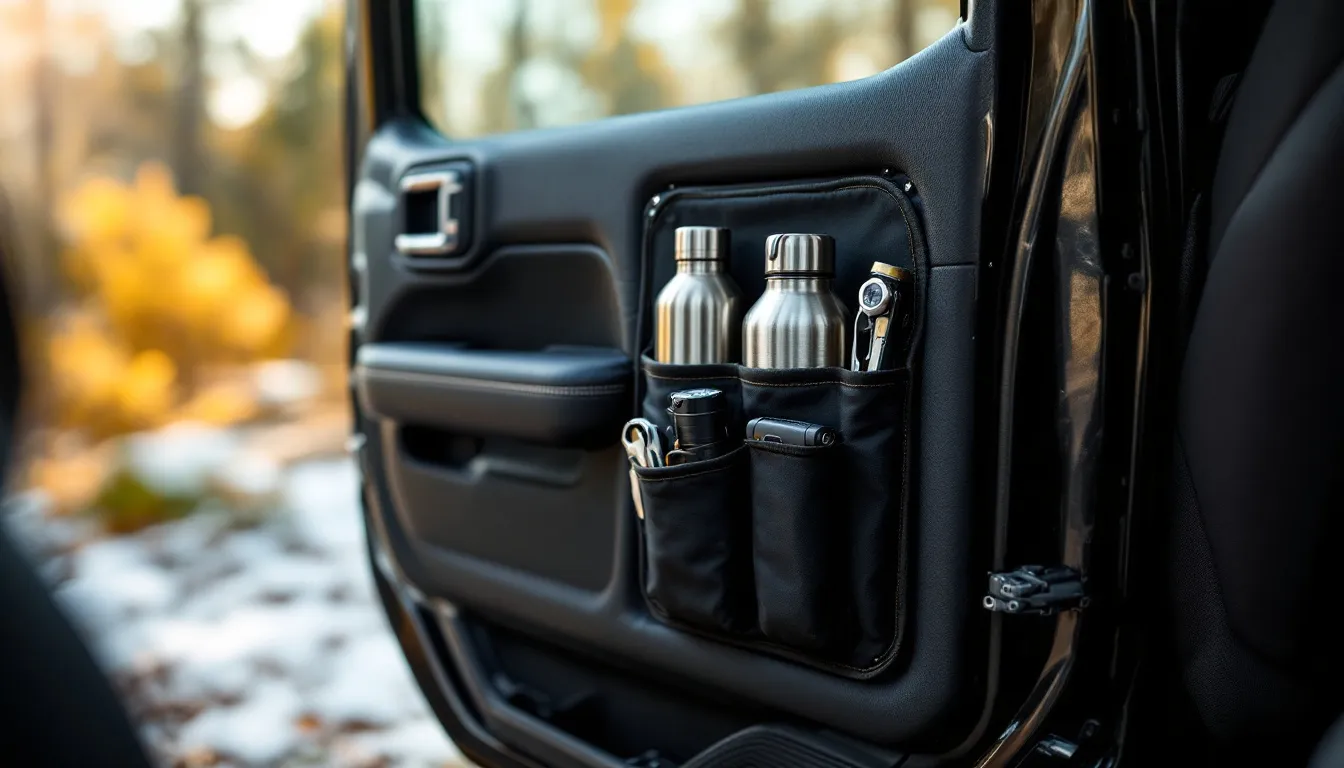
The JL's factory door pockets are shallow, lipless, and useless the moment you hit the trail. A water bottle tips on its side, a multitool disappears into the bottom, and by the time you hit a shelf rock, everything's rolling around. A door storage organizer with pockets fixes that with actual retention, structure, and compartments sized for real gear.
The short answer: choose based on whether you run full doors year-round or swap to half doors seasonally. Soft fabric inserts work for daily drivers but won't survive trail flex. Hard panel replacements deliver the cleanest look and deepest storage but demand careful fitment research by trim. Hanging pouches offer the most flexibility across all door configurations, which is why off-road builders favor them.
The most common fitment mistake is ordering a JK organizer on a JL because the listing just says "Wrangler." The JK (2007-2018) and JL (2018-present) share no door panel geometry. Check the listing explicitly for 2018+, JL, or JLU before you add to cart. This guide covers every organizer type, every fitment trap, and what to verify before you buy. If you're planning a broader interior refresh, our JL interior accessories overview covers what pairs well with door storage.
Why the JL's Stock Door Pockets Fall Short
The factory pocket was designed for incidental storage, not trail use. It's roughly 1.5 inches deep with no structural lip and no dividers. That geometry means a 20 oz bottle sits at an angle instead of upright, and smaller items like a lip balm or folded map just migrate to the bottom in a heap.
The real problem shows up off-road. On a talus slope or anything loose, the pocket flexes with the door panel and everything inside becomes a clatter of loose items. You hit a rut and the bottle tips. You hit bigger terrain and it's gone.
Trim level creates a second variable. Sport and Sahara door panels have a flatter surface below the armrest, while Rubicon panels have a slightly different lower contour. It's not dramatic, but forum reports show organizers listed for Sport fitment sometimes have a small gap on Rubicon doors and vice versa.
Rear JLU doors add another layer. Rear pockets are shallower than front pockets and curve differently. An organizer sized for a front door won't seat correctly in the back. If you're buying for all four doors, check whether the listing addresses front and rear separately instead of just saying "JL compatible."
Types of JL Door Storage Organizers Available
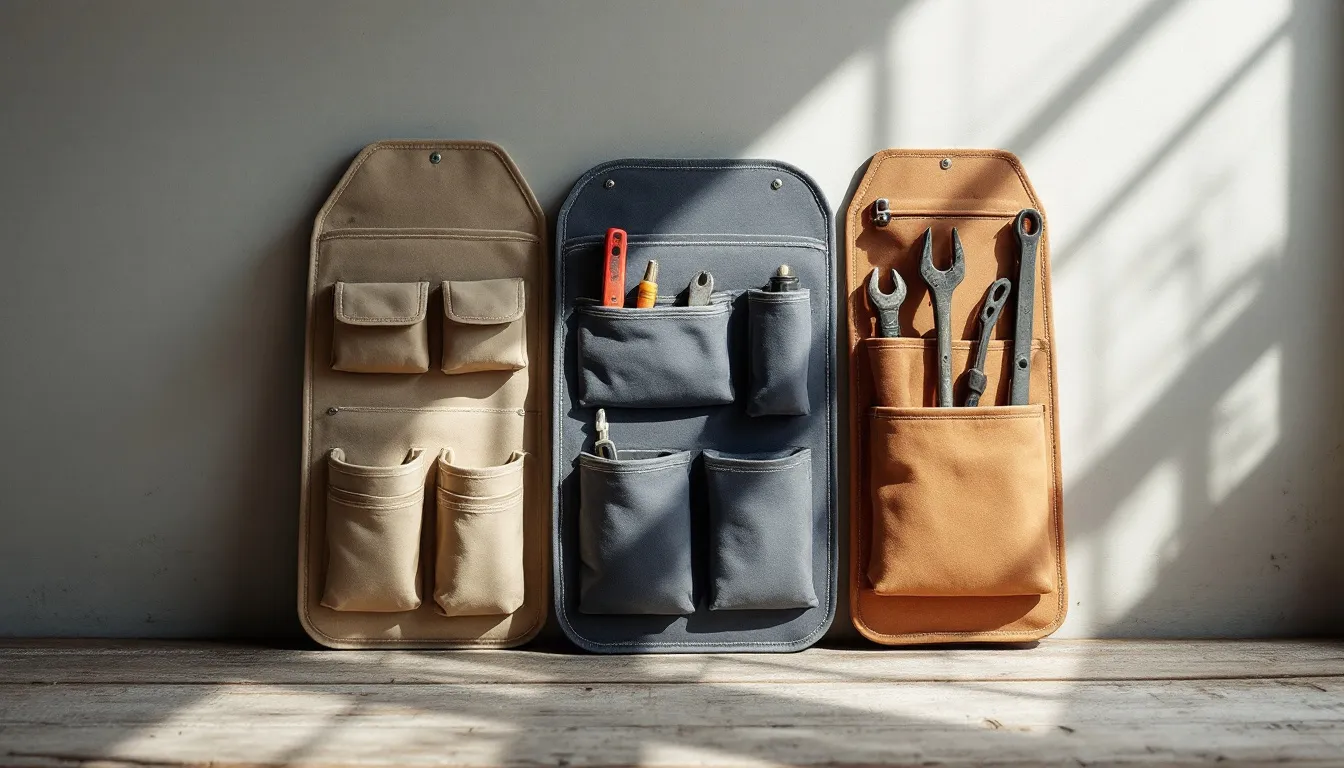
Three organizer types cover the JL market: soft fabric inserts, hanging pouches, and hard panel replacements. Each installs differently, handles storage differently, and works (or doesn't) with half doors. Knowing which one fits your actual use saves a return.
Soft Fabric and Neoprene Inserts
Soft inserts drop into the existing door pocket and line it from the inside. Most are neoprene or ballistic nylon with molded sides that hold their shape under load. They attach with friction fit and sometimes a small hook-and-loop strap around the pocket lip.
They work well for mid-size items: a 20 oz water bottle, sunglasses, a folded map, trail gloves. The advantage is that they add depth and structure without permanently changing the door. The limitation is real. They rely on the stock pocket geometry, so if your trim has an oddly shaped or narrow pocket, the insert won't seat flush.
Half-door compatibility: Don't bother. When you remove the lower door section, the pocket disappears with it. A soft insert goes with it.
Hanging Fabric Pouches
Hanging pouches attach to the window frame or armrest instead of sitting in the pocket. They use straps, carabiners, or hook-and-loop attachment and hang against the lower door panel. Most have multiple exterior pockets, mesh windows, and internal dividers.
This is the most flexible type. You can move them between doors, reconfigure them, and use them on either full or half doors because the attachment point is above the door cut line. The trade-off is motion. They shift and bounce more than rigid options, and straps loosen over time without checking.
Half-door compatibility: Hanging pouches are the only type that works with half doors, provided the attachment point is above the cut line. Check attachment height in the listing before buying.
Hard Panel Replacements
Hard panel organizers replace the lower door panel section entirely. They're molded from ABS plastic and clip or bolt into the factory attachment points. They offer the most rigidity, the deepest pockets, and the cleanest look. Many include open slots, covered compartments, and elastic retention straps.
The trade-off is fitment specificity. Hard panels are trim-specific and model-year-specific. A panel built for a 2021 Sport may not align with a 2024 Rubicon's attachment points. Installation takes 30 to 60 minutes per door and requires removing the factory panel.
Half-door compatibility: Not compatible with half doors. You're replacing the section that gets removed.
Fitment by Trim: Sport, Sahara, Rubicon, and 4xe
Not all JL door organizers fit all JL trim levels. Door panel shape, attachment point location, and factory speaker integration all matter.
Sport and Sport S: The simplest door panel with no Beats audio integration. Most aftermarket organizers list Sport first, so selection is widest here.
Sahara: Sahara panels share much of the Sport geometry at the lower pocket but the upper armrest differs. Lower-pocket organizers typically fit the same, but confirm Sahara is listed.
Rubicon: The lower section curves differently and on some model years has different clip positions. Owner reports show some organizers fit Rubicon with minor adjustment while others require forcing or leave a visible gap. If a listing says "Sport/Sahara only," believe it.
4xe: The 4xe runs a standard JLU four-door platform with no powertrain-specific door panel changes. Fitment follows JLU Sahara or JLU Rubicon patterns depending on trim.
392: Same story. The 392 sits on the standard JLU platform with Rubicon door panels.
JK versus JL confusion: This is the single most common complaint in JL organizer reviews. Many Amazon and eBay listings use "Wrangler" without specifying JL or JK. The JK (2007-2018) and JL (2018-present) share zero door panel geometry. Mounting tabs and pocket dimensions are completely different. Owner reports describe buying what looked correct only to find it's JK fitment.
Check the listing title. Check the description. Check the Q&A section. If it doesn't say "JL," "2018+," or "2018-present," it's probably JK.
Door Organizer Types at a Glance: Comparison Table
Comparing the three types side by side shows which one fits your actual build.
| Type | Price Range | Installation | Best For | Half-Door Compatible | Fitment Risk |
|---|---|---|---|---|---|
| Soft Fabric/Neoprene Insert | $15–$40 | Drop-in, under 5 minutes | Daily drivers, light trail use | No | Low; fits most Sport and Sahara |
| Hanging Fabric Pouch | $20–$55 | Strap attach, 5–15 minutes | Off-road use, half-door runners, versatility | Yes | Very low; not panel-dependent |
| Hard Panel Replacement | $60–$130 | Clip/bolt, 30–60 min per door | Maximum capacity, OEM look | No | High; verify trim and year carefully |
Hanging pouches show up most often in off-road build threads because they work across all trims and door configurations. Hard panels deliver the most organized storage but require the most fitment homework. Soft inserts are the lowest-risk entry point if you're new to door storage mods.
What to Look For Before You Buy
Before clicking buy, check four specific things: speaker grille clearance, how retention actually works, water resistance, and whether the panel intrudes on cabin space.
Speaker Grille Clearance
Many JL owners run the factory Alpine or Beats audio upgrade with a speaker grille in the lower door panel. Hard panel replacements and some soft inserts interfere with this grille if they're not designed around it. Owner reviews consistently flag this as a problem with generic listings.
Look for language like "speaker grille compatible" or "Beats/Alpine cutout." Check product photos for a speaker opening. If the listing doesn't mention speakers at all, assume it's not compatible.
Retention Method
How well an organizer stays in place under trail conditions matters as much as capacity. A soft insert relying only on friction fit will slide when the door panel flexes over rough terrain. Look for hook-and-loop straps, a lip that wraps over the pocket edge, or a positive-locking clip.
Hanging pouches with carabiner or screw-gate clips hold better than those with plastic snap buckles.
Water Resistance
If you wheel wet or your soft top comes down in the rain, moisture exposure is real. Neoprene handles water better than woven fabric. Hard plastic panels are inherently water-tolerant. Open-weave mesh pouches dry fast but offer no water resistance in a downpour.
Match the material to where you actually drive.
Knee Clearance Trade-Off
Hard panel replacements project farther into the cabin. On a two-door JL where cabin space is tight, a thick panel can make entry and exit noticeably tighter for taller drivers. Owner reports describe this as a genuine trade-off, not a dealbreaker, but check the stated projection depth before ordering if you're over six feet tall.
Installation: What the Process Actually Looks Like
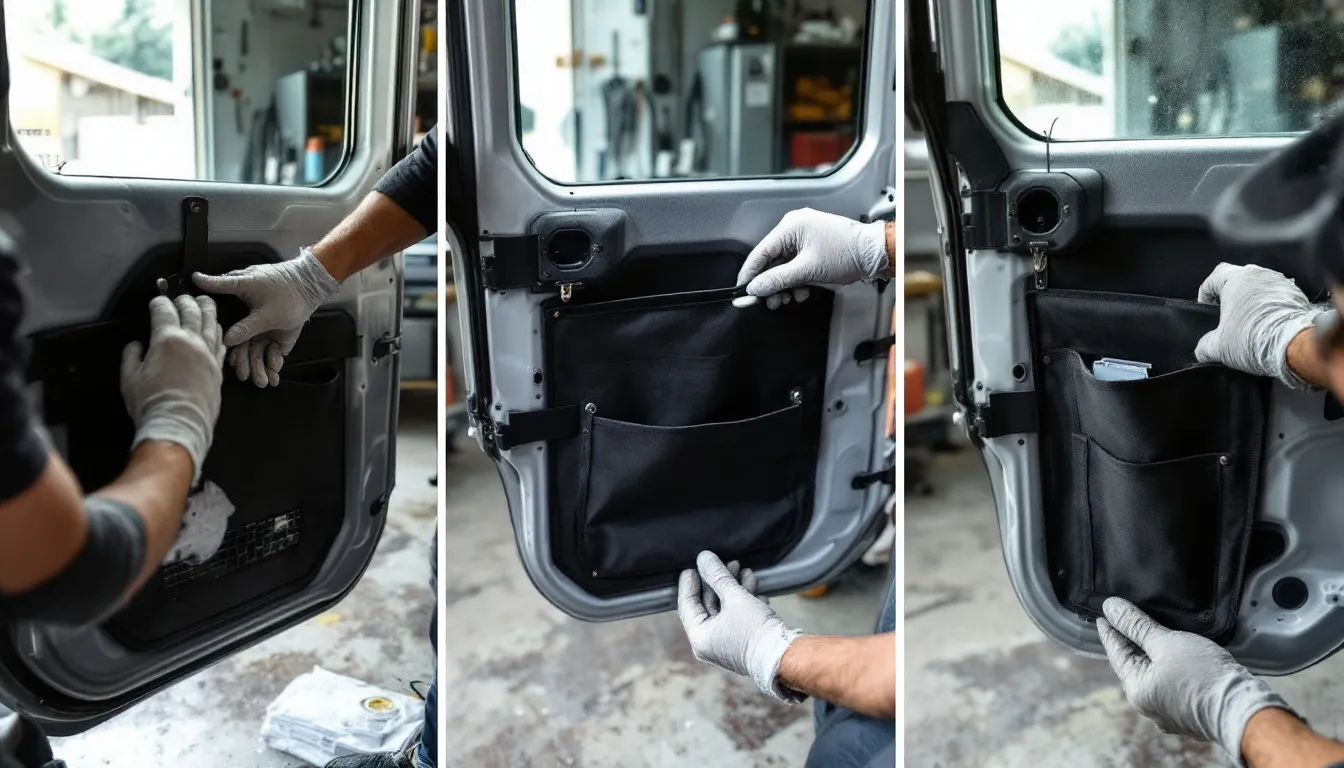
Installation complexity varies by type, but none of the three requires special tools or professional help.
Soft fabric insert: Clean the existing door pocket and press the insert in place. Optionally secure a hook-and-loop strap around the pocket lip. Under five minutes per door. No disassembly. The only thing to confirm is that the insert sits flush at the corners so it doesn't rock under load.
Hanging pouch: Route attachment straps behind the armrest trim or around the window frame, then thread through buckles or carabiners to set hang height. Five to 15 minutes per door. The main variable is getting the height right so the pouch sits flat without bunching at the bottom.
Hard panel replacement: Product documentation typically shows removing the factory lower panel by releasing plastic retaining clips along the lower edge and any screw points. The replacement panel then presses or bolts into the same attachment points. Owner reports describe 30 to 60 minutes per door. Most time is spent releasing stubborn factory clips without cracking them.
A trim panel removal tool (a few dollars) makes this significantly easier and avoids cracking aged plastic clips.
Running Half Doors? Your Storage Options Change
Running half doors eliminates the lower door section entirely, and with it, any organizer that lives in the stock pocket. This is a documented gap in many organizer product listings that don't mention half-door compatibility at all.
The physical reality is straightforward. The lower half door contains only the window frame and a minimal inner panel. The storage pocket, along with any soft insert or hard panel in it, belongs to the lower section that comes off.
If your build involves seasonal half-door use, a pocket-based organizer is only useful for the months you're running full doors. The only organizer type that works with half doors is the hanging pouch, and only if the attachment point is above the half-door cut line.
Before buying, check whether the attachment straps reach the armrest or window frame of the upper half door, not the lower door section. Look specifically for "half-door compatible" or "attaches above window sill." If product photos show straps going to the lower panel, that attachment point is gone with the lower door.
Many JL owners who run half doors simply remove the door organizers for those months. That's a legitimate and practical approach.
Frequently Asked Questions
Will a JK door organizer fit a JL?
No. The JK (2007-2018) and JL (2018-present) use completely different door panel geometries with different attachment points, pocket dimensions, and contours. Using a generic "Wrangler" listing is one of the most common fitment mistakes in JL accessory shopping. Always verify the listing specifies 2018+ JL or JLU.
Do JL door organizers fit the rear doors on a JLU?
Not reliably. Rear JLU door pockets are shallower and have a different curve compared to front door pockets. Organizers sized for front doors often don't seat correctly in the rear. If you want all four doors organized, look for listings that address front and rear fitment separately and confirm both are included.
Can I use a door organizer with a factory speaker upgrade?
It depends on the organizer type and whether it includes a speaker cutout. Many hard panel replacements and some soft inserts block the factory Alpine or Beats speaker grille if they're not specifically designed around it. Look for "speaker compatible" or "audio cutout" language and check product photos for a grille opening.
What is the best material for a JL door organizer for off-road use?
Neoprene and ABS plastic are the most practical choices for off-road and wet-condition use. Neoprene resists moisture, handles UV exposure well, and doesn't crack under trail flex. Hard ABS panels are durable and easy to wipe clean but add the most cabin intrusion. Open-weave fabric pouches dry quickly but offer less structural support under hard use.
Are JL door organizers compatible with soft-top and hard-top models?
Yes. Door panel configuration is independent of roof type. The organizer attaches to the door interior, so whether you run a soft top, hard top, or no top has no effect on fitment or function. The only consideration is that soft-top owners expose the interior to more moisture, which makes water-resistant materials a higher priority.
How much storage capacity do JL door organizers actually add?
A soft insert adds roughly 0.5 to 1 inch of usable depth to the existing pocket, bringing total pocket depth to about 2 to 2.5 inches. A hard panel replacement can add 2 to 3 inches of total depth depending on the design. A hanging pouch typically holds 3 to 8 liters of gear depending on size. The actual capacity depends more on how you organize dividers and compartments than on the organizer type.
Do I need different organizers for my two-door JL and JLU?
Not necessarily for hanging pouches, which work the same on both. Soft inserts and hard panels are trim-specific but not necessarily model-specific. A front-door organizer for a two-door JL will fit the front door of a JLU. Never use a front-door organizer in a JLU rear door without confirming rear-specific fitment in the product listing.
Choosing the Right Door Organizer for Your JL
The right organizer comes down to one question: how do you use your doors?
Run full doors year-round and want maximum storage with a clean look? A hard panel replacement is worth the fitment research and the higher price. Run half doors even occasionally? A hanging pouch is the only type that stays useful in both configurations. Want the lowest effort and lowest cost? A soft neoprene insert solves the basic pocket-depth problem without any real installation.
Two fitment mistakes account for most buyer regret. First, ordering a JK organizer on a JL because you trusted a generic "Wrangler" listing. Second, ordering a front-door organizer for JLU rear doors without checking rear-specific dimensions. Both are easy to avoid if you verify the exact model year and door position before you buy.
Door storage is usually one of the first interior mods JL owners tackle. It connects to a broader upgrade sequence covering seat storage, cargo management, and trail-ready organization. The more specific your fitment research before buying, the fewer returns you'll be processing once you're on the trail.
Ready to tackle this mod? Grab the JL Build Planner to map out your full interior and storage strategy alongside other mods you're planning.