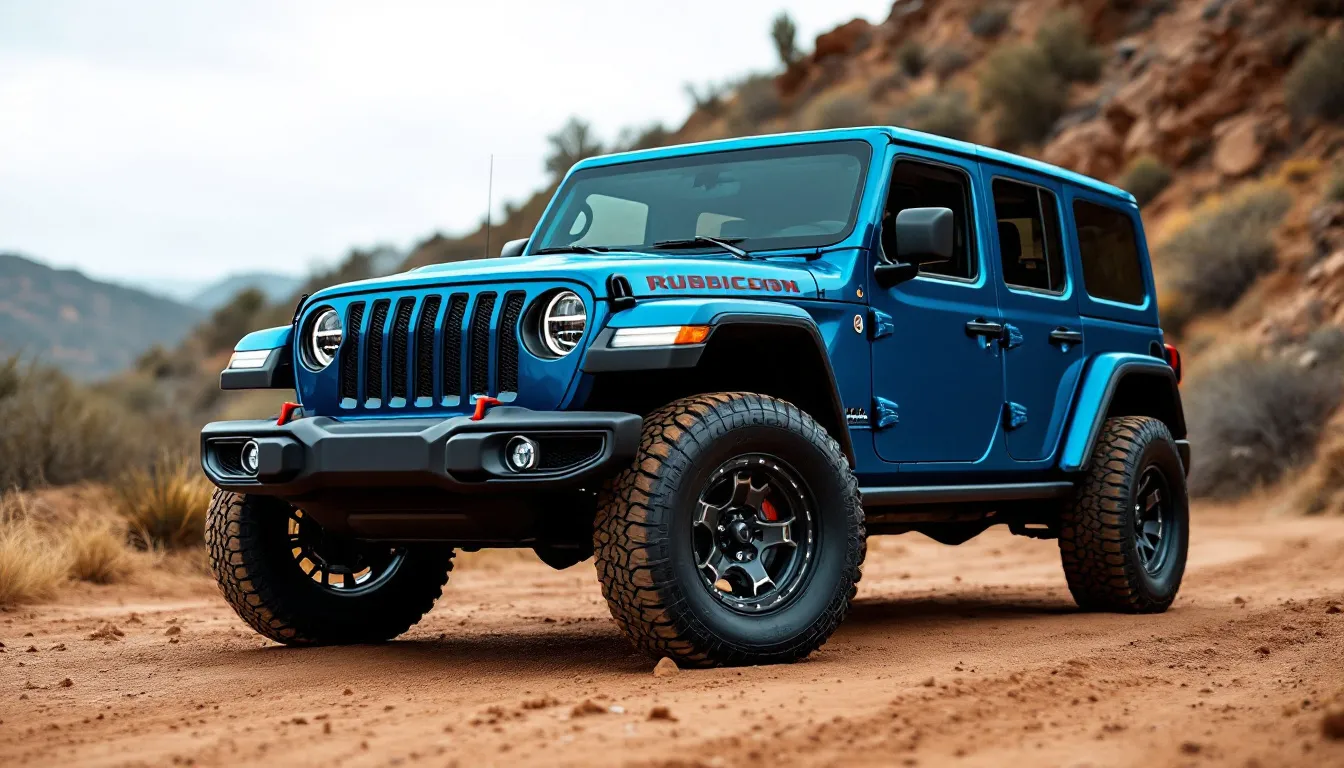
The Jeep Wrangler JL is the seventh-generation Wrangler, built from 2018 to present. It's the most technically sophisticated version of the nameplate yet while keeping the core removable-top, solid-axle off-road formula intact.
If you're trying to decide which Wrangler JL to buy, here's the short answer: the Sport S is the practical entry point, the Sahara is the comfort-focused daily driver, and the Rubicon is the only trim with a factory-ready serious off-road package. Everything else, including the Willys, High Altitude, and 4xe variants, sits somewhere in between. The JL also comes in two body styles (two-door JL and four-door JLU) and three engine options, with meaningful spec changes across each model year from 2018 through 2026.
That's six trims, two body styles, at least three powertrains, and six-plus years of updates to sort through before you hand over a deposit. This guide breaks down every variable: what each trim actually includes, which model years matter, what goes wrong, and what a used JL is really worth.
If you're coming from an older generation and want to understand what's fundamentally different about the current platform, start with how the JL differs from the JK before reading further.
What the JL Generation Changed from the JK
The JL generation, launched for the 2018 model year, brought a longer list of structural and technology changes than any previous Wrangler update. It retained solid front and rear axles and removable body panels, but nearly everything around those fundamentals was redesigned.
Key structural changes included a wider body with more glass area, a fully revised electrical architecture, and significantly improved structural rigidity that made the JL measurably quieter on road than the JK. The shift to Uconnect 4 (and later Uconnect 5 from 2021 onward) brought Android Auto and Apple CarPlay into the cabin for the first time. A six-speed manual remained available, but an eight-speed automatic became the standard pairing for all engine options.
Engine options expanded beyond the JK's single V6. The 2.0L turbocharged four-cylinder arrived with the 2018 launch, with eTorque mild-hybrid assist added as a running change. The 3.6L Pentastar V6 carried over in updated form. The 4xe plug-in hybrid, pairing the 2.0L turbo with two electric motors for a combined 375 horsepower, arrived for the 2021 model year. A 392 cubic-inch V8 Rubicon variant launched the same year.
Many owners who upgraded from JKs report that the JL feels more composed on highway runs and less fatiguing over long distances, while trail capability remained equal or better depending on trim. For a full breakdown of every mechanical and feature difference between the two generations, the full breakdown of JL vs JK differences covers it in detail.
The JL's year range spans 2018 through the current 2026 model year, covering eight production years with incremental but sometimes meaningful changes each year.
JL Trim Levels: Sport, Sahara, Rubicon, and Everything In Between
The JL Wrangler comes in six main trim configurations. Choosing the right one means understanding what factory hardware each trim includes, because swapping in those parts afterward almost always costs more than buying up front.
Here's how each trim stacks up:
Sport
The base trim delivers steel bumpers, manual windows on the Sport (power on the Sport S), a 5-inch Uconnect 4 touchscreen, and the 3.6L V6 as standard. No heated seats, no Bluetooth audio streaming on the base Sport. The Sport S adds convenience features most buyers consider essential: power windows, Bluetooth, and a slightly larger feature set. MSRP on a Sport S JLU currently starts around $37,000 to $39,000.
Best for: buyers who want to start clean and build the Jeep themselves without paying for features they'll replace.
Willys
The Willys edition adds 32-inch all-terrain tires, heavy-duty steel bumpers, Dana 44 axles, a rock-rail protection package, and a limited-slip rear differential over the Sport S. It's one of the most overlooked values in the JL lineup because it delivers meaningful off-road hardware without Rubicon pricing. Starting MSRP has typically been in the $38,000 to $42,000 range depending on body style and year.
For a more detailed look, see the Willys edition in detail.
Best for: buyers who want factory trail hardware on a budget.
Sahara
The comfort-focused trim includes 18-inch aluminum wheels, LED lighting, heated front seats, a body-color hardtop option, and a 7-inch Uconnect display as baseline (8.4-inch on later years). The Sahara uses Dana 30/44 axles rather than the Rubicon's upgraded units and carries no front locker. MSRP typically runs from $42,000 to $48,000.
Best for: buyers who spend more time on pavement than on trails.
High Altitude
Positioned above the Sahara as a luxury-focused variant with leather seating, upgraded audio, and unique wheel and color options. It's less common, harder to find used, and expensive relative to the feature additions.
Best for: buyers who prioritize cabin finish over off-road hardware.
Rubicon
The only JL trim that ships with factory electronic lockers (front and rear), disconnecting front sway bar, Rock-Trac transfer case with a 4:1 low-range ratio, and 33-inch tires on beadlock-capable wheels. If you plan to run trails seriously without spending additional money on axle lockers and sway-bar disconnects (each can cost $600 to $1,500 or more to add aftermarket), the Rubicon's MSRP premium is usually justified. Starting prices run from $47,000 to $55,000 or higher depending on options.
Best for: serious off-road buyers who want factory-ready capability.
4xe (Plug-In Hybrid)
Based on the Sahara and Rubicon body trim levels, the 4xe adds a plug-in hybrid system rated at 375 horsepower combined and about 21 miles of electric range. Regarding 4xe discontinuation: Stellantis has signaled a broader shift in its EV strategy, and there has been credible reporting that the 4xe could be phased out or revised. As of late 2026, no confirmed discontinuation date has been officially announced for the current 4xe configuration, but the situation remains fluid and worth monitoring before purchase.
Best for: buyers who want reduced fuel costs on commutes and occasional trail capability.
Two-Door JL vs JLU: Dimensions, Capability, and the Real Tradeoffs
The two-door JL and four-door JLU share the same mechanical platform, but they differ enough in dimensions and character that the choice deserves deliberate thought rather than defaulting to the longer model.
| Body Style | Overall Length | Wheelbase | Cargo Space | GVWR | MSRP Premium |
|---|---|---|---|---|---|
| JL (2-door) | 166.8 in | 96.8 in | 31.7 cu ft (top off) | ~4,500 lb | Base |
| JLU (4-door) | 188.4 in | 118.4 in | 72.4 cu ft (seats up) | ~5,100 lb | +$4,000-$5,000 |
The two-door's shorter wheelbase improves approach and departure angles on tight trail obstacles, and the reduced overall length helps in technical terrain where articulation over short sections matters. Off-road enthusiasts who run narrow trails frequently report preferring the two-door for its maneuverability, though the difference is subtle in most recreational four-wheeling scenarios.
For daily use and family ownership, the JLU's practical advantages are harder to ignore. Four adult doors, substantially more cargo capacity, and a rear seat that's usable rather than symbolic make the JLU the default choice for buyers who use the Jeep as a primary vehicle. The longer wheelbase also tends to produce a more composed highway feel at speed.
One tradeoff owners don't always anticipate: the JLU's longer wheelbase affects recovery approach on certain V-shaped dips, and the added weight means slightly higher fuel consumption across the board. If the two-door is on your shortlist, make sure to budget the MSRP difference and compare it against the trail and daily-use tradeoffs that actually match your driving patterns.
JL Model Year Changes: What Changed and Which Years to Prioritize
Not every model year of the JL is equivalent, and a few specific years brought changes significant enough to affect used pricing and reliability calculus.
2018
The launch year brought a strong feature set relative to the JK, but some early production units had known oil consumption issues with the 2.0L turbo and minor teething problems with the electrical system. The Uconnect 4 platform debuted here. Worth inspecting carefully on the used market.
2019
Incremental refinements followed. The 8-speed automatic received calibration updates. Some buyers consider 2019 a safer early-run choice over 2018, though the differences are minor.
2020
The 3.0L EcoDiesel V6 arrived, offering the best fuel economy in the lineup at around 22 mpg highway. The diesel became a legitimate option for owners who cover significant mileage. Known issues include some fuel injector sensitivity reported in owner forums.
2021
A significant year. The 4xe plug-in hybrid arrived, Uconnect 5 replaced Uconnect 4 on higher trims (bringing a much faster interface), and the 392 V8 Rubicon launched. If you want Uconnect 5 without paying for a new vehicle, 2021 and later is your floor.
2022-2023
Continued refinement. Uconnect 5 spread wider across trims. Safety tech features, including forward collision warning and blind-spot monitoring, became more broadly available. The 4xe gained additional software updates improving electric range management.
2024-2025
Mild interior updates and expanded color availability followed. No fundamental mechanical changes of note based on available TSB data and forum consensus through this writing.
2026
Jeep has updated exterior color options for 2026, though the full palette varies by trim. Specific color availability changes yearly; checking the current configurator is the most reliable source since color offerings can change mid-cycle. No significant powertrain revisions are documented for the 2026 model year.
Before buying any used JL, cross-reference the service history against JL maintenance schedule and service intervals to see exactly what should have been done by a given mileage point.
How Reliable Is the Jeep Wrangler JL: Known Problems and What to Watch

The JL is not a luxury car in reliability terms, but it's more reliable than the JK was at launch, and most recurring issues are well-documented and fixable. Expect periodic maintenance costs above average for the segment, with specific failure patterns concentrated in a few known areas.
Death Wobble
Death wobble is the most discussed JL reliability topic in owner forums, and it's frequently misunderstood. Many buyers assume death wobble is a wheel bearing problem. In practice, it's almost always a combination of multiple worn or loose suspension components: track bar bushings, ball joints, tie rod ends, and potentially steering stabilizer wear all contribute. Replacing a single component rarely eliminates it entirely. Owners who have resolved death wobble consistently report that a systematic inspection of the entire front suspension, followed by addressing all worn items together, is more effective than chasing individual parts. A track bar end link that feels tight at rest may have play under load that a static inspection misses.
Coolant Leaks and Water Pump Failure
Owners report water pump failure as a notable source of coolant leaks on the 3.6L V6. The identifiable signs are a squeaking belt as the pump bearing degrades and visible coolant drips from the bottom of the pump housing. Catching this before the pump fails completely prevents the more expensive scenario of coolant loss during operation.
Suspension Squeaking
Suspension squeaking over dips and low-speed transitions frequently originates from bushings and shock mount contact points rather than from structural failure. Many owners report that white lithium spray applied to bushing contact surfaces resolves the noise, though persistent squeaking warrants a bushing inspection for actual wear.
Electrical Gremlins
Early 2018 build-date vehicles had documented software-related issues in the Uconnect and start-stop system. Most were addressed via over-the-air updates, but checking TSB history on used 2018 examples is worthwhile.
For keeping your JL ahead of these issues, following the JL maintenance schedule by interval is your best preventive tool. For trail use, investing in skid plates that protect the undercarriage before you go off-road reduces the risk of impact damage becoming a reliability event.
Jeep Wrangler 4x4 Systems: What Each Trim Gets and How They Work

The JL Wrangler's 4x4 capability varies significantly by trim, and not all four-wheel-drive systems are created equal. Understanding what's under each trim is essential before you decide how much off-road hardware you actually need from the factory.
Command-Trac (Sport, Willys, Sahara)
The standard 4x4 system uses an NV241 transfer case with a 2.72:1 low-range ratio. It's a part-time system: 2H for road use, 4H for loose surfaces, 4L for technical terrain. It's adequate for light to moderate trails, mudding, and snow. The Sahara version is fine for most recreational four-wheeling.
Rock-Trac (Rubicon)
The Rubicon's transfer case delivers a 4:1 low-range ratio compared to the Command-Trac's 2.72:1. That additional mechanical advantage matters significantly in slow-speed rock crawling where torque multiplication over short obstacles is the key variable. The Rubicon also adds a front electronic locker to complement the rear locker, and the disconnecting front sway bar allows each front wheel to travel further independently for better axle articulation. These three items together, front locker, rear locker, and sway-bar disconnect, are what separate the Rubicon's trail hardware from every other trim.
The Regearing Problem
Owners commonly upgrade to 33-inch tires from the JL's stock 29-inch or 31-inch sizes without changing the differential gearing. The consequence is a higher effective final drive ratio: the engine spins fewer revolutions per tire revolution, reducing low-end torque availability and increasing drivetrain load at lower speeds. Over time, this accelerates wear on axle components and reduces fuel economy measurably. If you're planning a 33-inch or larger tire upgrade on a non-Rubicon, budget for a 4.56:1 or 4.88:1 gear change alongside the tires. For matching tires to your gearing setup, see the guide on choosing tires that match your JL's gear ratio.
Buying a Used Jeep Wrangler JL: What to Inspect and What to Pay

A used JL is a solid purchase if you know what to look for. The market has matured enough that you can find 2018-2020 examples with moderate mileage, but the modification history of a used JL matters as much as its service records.
Realistic Price Ranges
As of late 2026, used JL prices broadly fall in these ranges based on year and condition:
- 2018-2019 Sport S/Sahara: $25,000 to $33,000 depending on mileage and trim
- 2020-2021 Sahara/Rubicon: $33,000 to $44,000
- 2022-2024 models: $38,000 to $52,000 for well-optioned examples
Rubicon and 4xe examples command premiums at every year. Actual market prices vary by region and condition; these ranges reflect general forum-reported transaction data rather than guaranteed pricing.
Five Inspection Priorities
Modification history and regearing. A used JL with 35-inch tires and no regear documentation has almost certainly accumulated accelerated axle and drivetrain wear. Ask for receipts or walk away.
Undercarriage condition. Check for bent skid plates, cracked transfer case skids, and frame contact points that suggest the vehicle was run hard on rock. Scraped-raw steel is not necessarily a problem, but bent or fractured protection hardware suggests impacts worth investigating.
Death wobble test drive. Take it to highway speed and hit a moderate road imperfection. Any high-frequency steering shake warrants a full front suspension inspection before purchase.
Water pump and coolant system. Look for staining around the front of the engine and listen for belt squeak at startup. Ask when the coolant was last flushed.
Electrical system check. Connect to the Uconnect system, test all powered accessories, and verify the radio, camera, and any active safety features function as expected.
Cross-reference the service history against the JL maintenance schedule to tell you exactly what should have been done by a given mileage point. Additionally, reviewing skid plate condition as a used-buying inspection point helps you gauge how hard previous owners pushed the vehicle off-road.
Jeep Wrangler JL Modifications: Where to Start and What Actually Works

The JL's modification potential is one of its core selling points, and the aftermarket is mature enough that you can build almost any configuration. Start with the mods that affect capability and safety before you move to aesthetics, and know what each upgrade actually requires before you buy.
Tires First
Upsizing tires is the highest-impact modification for trail capability and the one with the most downstream consequences. Owners frequently run 33-inch all-terrain tires on stock suspension without regearing, and many report acceptable daily driving but noticeable low-end sluggishness and reduced fuel economy. Go to 35 inches or larger without a regear and the acceleration loss becomes hard to ignore on road. Plan your tire size and gear ratio together. The guide to all-terrain tire options sized for the JL covers the sizing tradeoffs in detail.
Bumpers
Replacing the factory plastic bumpers is the most common cosmetic-plus-functional upgrade, adding protection, a winch mount, and recovery points. Steel bumpers in the $250 to $400 range offer a significant durability improvement over OEM plastic. The Hooke Road Different Trail X Front Bumper provides excellent winch mounting and recovery point placement across both two-door and four-door JL models.

For a rear protection option, the OEDRO Rear Bumper pairs well with a front bumper upgrade and includes integrated LED lights:
For a budget front bumper option, the ECOTRIC is worth considering if winch plate capacity and recovery points are your primary requirements:
Lighting
Upgrading the JL's fog lights to a higher-output LED unit is one of the simpler mods with a real functional payoff. The TRUE MODS 60W 4-inch LED fog lights are a clean fit for 2018-2026 Sport models and provide noticeably improved off-road visibility:
On HID headlight upgrades: many buyers assume you can swap in an HID bulb as a plug-and-play replacement in the JL's factory housing. This is incorrect. The JL uses reflector-style housings designed for halogen output. Running an HID source in a reflector housing produces uncontrolled glare rather than focused light, is illegal in most states when aimed at oncoming traffic, and requires a projector-style housing and a light-leveling system to work correctly. If you want HID-quality output, the correct path is projector housing replacement, not a bulb swap.
Interior
Dashboard and center console trim upgrades are low-cost, high-visibility changes that improve the cabin feel without touching anything mechanical. The RT-TCZ console trim cover is a direct bolt-on for 2018-2022 JL and JLU models:
For practical cabin organization, see the guide to interior storage options for the JL. And if you're adding undercarriage mods alongside bumpers, skid plates to protect the undercarriage should be on the list before you take the Jeep off-road.
Frequently Asked Questions About the Jeep Wrangler JL
Is the Jeep 4xe plug-in hybrid being discontinued?
As of late 2026, Stellantis has not officially confirmed a discontinuation date for the 4xe. Credible reporting about broader EV strategy changes within Stellantis could affect the 4xe's future, but no firm end date is confirmed. If you're considering a new 4xe purchase, verify current availability with a dealer and check for any recently announced changes before committing.
How reliable is the Jeep Wrangler compared to other vehicles?
The JL Wrangler is more reliable than its JK predecessor and more capable of absorbing trail abuse, but it does not match the long-term reliability averages of mainstream crossovers or trucks. Known recurring issues, including death wobble, water pump failure, and electrical gremlins on early 2018 builds, are real but manageable. Owners who follow the maintenance schedule and address problems early typically report satisfactory long-term ownership.
What are the dimensions of a four-door JL Wrangler?
The JLU is 188.4 inches in overall length with a 118.4-inch wheelbase, compared to the two-door JL's 166.8 inches and 96.8-inch wheelbase. The JLU offers 72.4 cubic feet of cargo space with seats up.
How do you diagnose death wobble in the JL steering?
Death wobble presents as a high-frequency, violent steering wheel oscillation after hitting a road imperfection at highway speed. The cause is almost never a single component. Thorough diagnosis should inspect the track bar end links, all ball joints, tie rod ends, and the steering stabilizer for wear or looseness. Many owners report that replacing only one worn component doesn't eliminate the problem; addressing all worn front-end components together is typically what resolves it.
Does running larger tires without regearing cause drivetrain wear?
Yes. Upsizing from stock to 33-inch tires without a corresponding gear ratio change effectively raises the final drive ratio, which increases drivetrain load at low speeds and during acceleration. Owners who run 35-inch or larger tires without regearing report accelerated wear on axle components and transmission stress. For long-term durability, pair your tire upgrade with a regear to a numerically higher ratio (4.56 or 4.88 depending on tire size).
Can you upgrade to HID headlights as an aftermarket modification?
Not with a simple bulb swap. The JL's factory halogen reflector housings are not designed for HID light sources. Installing an HID bulb in a reflector housing produces unfocused, scattered light that reduces your forward visibility and creates dangerous glare for oncoming drivers. A correct HID or high-intensity upgrade requires projector-style replacement housings with an integrated leveling system.
What are the different JL Wrangler trim levels?
The JL lineup includes six main trims: Sport, Sport S, Willys, Sahara, High Altitude, and Rubicon. The 4xe and 392 are powertrain-focused variants built on Sahara and Rubicon trim levels respectively. The Rubicon is the only trim with factory front and rear lockers, a 4:1 transfer case, and a disconnecting front sway bar. The Willys trim in detail covers that specific variant's off-road value proposition.
What causes coolant to leak from the JL engine block?
On the 3.6L V6, owners report that water pump failure is the most common source of coolant leaks. The water pump bearing degrades over time, causing a squeaking belt before the seal fails and allows coolant to drip from the base of the pump housing. Less commonly, intake manifold gaskets and heater core connections can leak on high-mileage examples. Any sign of coolant loss should be diagnosed promptly to prevent overheating damage.
Choosing Your JL: The Short Version
Narrowing down the right Wrangler JL comes down to three decisions: how much off-road hardware you need from the factory, which body style fits your actual use pattern, and whether you're buying new or used.
The three-tier framework: buy the Sport S or Willys if you want to build the Jeep yourself and don't want to pay for factory features you'll replace. Buy the Sahara if pavement is your primary terrain and comfort matters. Buy the Rubicon if you want trail-ready capability without spending $3,000 to $5,000 adding aftermarket lockers and disconnects later.
On the used market, prioritize 2021 and later for Uconnect 5, confirm the modification history, and treat any unregeared lift and tire upgrade as a reason to negotiate on price. The inspection priorities in the used-buying section are your checklist; don't skip the test-drive death wobble check.
For context on how the JL fits into the broader Wrangler story, comparing the JL to the JK is worth reading before you finalize your thinking. Once you've settled on a trim and want to map out your mod build, get early access to the JL Build Planner.