The Short Answer for New JL Owners
The unspoken Jeep rules are an informal code of conduct shared across the Wrangler community. They cover how and when to use the Jeep Wave, trail etiquette for off-road runs, doorless driving legality, and the Duck Duck Jeep gifting tradition.
Pick up a new JL and you'll encounter these customs fast. The wave happens on your first drive out of the lot. Someone may leave a rubber duck on your hood within a week. Head off-road without knowing right-of-way rules and you'll learn the hard way.
None of this is written down officially. It's passed from owner to owner, shaped by decades of Wrangler culture. What follows pulls it together so you're not caught off guard.
A note on what this article covers: new owners commonly make a handful of the same mistakes, from running 4H on dry pavement to pulling the doors off without checking mirror laws in their state. Those are addressed in the relevant sections below.
If you're still deciding which trim to buy, the JL Wrangler buying guide covers every variant and model year in detail.
What Is the History Behind the Jeep Wave Tradition?
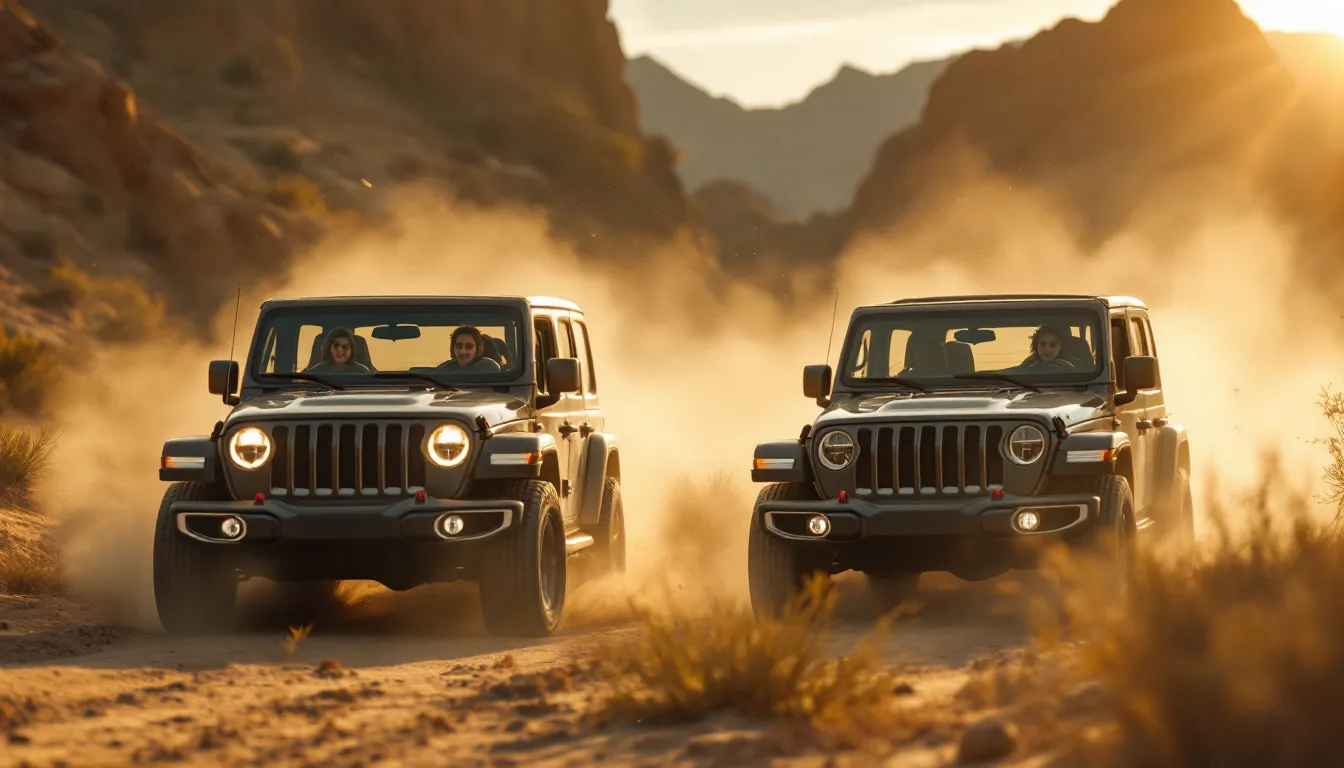
The Jeep Wave is a greeting exchanged between Wrangler drivers: a hand raise, two-finger salute, or nod acknowledged between passing Jeeps. Its roots trace back to World War II, when military Jeep drivers acknowledged one another on the road as a sign of shared experience. That spirit carried into civilian ownership and has held through every Wrangler generation since.
The mechanics are simple. As an oncoming Wrangler approaches, lift two fingers off the wheel, raise your whole hand, or nod. The other driver does the same. It takes under a second and signals that you're part of the same community.
New owners often wonder whether to initiate or wait. Initiate. You don't need permission. If a Wrangler is approaching, throw the wave. Failing to return one is considered poor form, and doing it consistently earns you a reputation in local communities.
The wave applies to Jeep Wranglers specifically, not the full Jeep lineup. A Grand Cherokee driver waving at you isn't breaking protocol, but you're not obligated to return it under the traditional custom. The JL continues this directly from the JK era. See how the JL differs from the JK generation if you're coming from an older Wrangler.
Owners on community forums consistently describe the wave as one of the first things that makes a new JL feel different from any other vehicle purchase. It's not marketed. It's just there, on the first drive home.
The Specific Rules Governing the Jeep Wave Tradition
The Jeep Wave follows an informal hierarchy. There's no official code; this is community-sourced convention, shaped by decades of owner culture. The Wrangler community has produced a widely recognized (if loosely enforced) priority order based on how modified, capable, or classic the Jeep is.
The general principle: the more stripped-down, trail-capable, or old-school the Jeep, the higher the perceived wave priority. A stock JL waving at a lifted, lockers-equipped CJ is expected to wave first and wave enthusiastically.
| Jeep Type | Wave Priority | Community Expectation |
|---|---|---|
| Classic Willys / CJ (pre-YJ) | Highest | Always wave first; returning the wave is non-negotiable |
| YJ / TJ (older generations) | Very high | Initiate the wave; you're waving at history |
| JK Wrangler (2007-2018) | High | Standard wave exchange; mutual acknowledgment expected |
| JL / JLU (2018-present, stock) | Standard | Wave at all Wranglers; you're expected to know the custom |
| JL / JLU (lifted, modified) | Standard to High | Modifications earn additional respect in the hierarchy |
| Rubicon trim (any gen) | Standard to High | Trail capability is acknowledged |
| Jeep Gladiator | Informal; variable | Many Wrangler owners extend the wave; not universal |
The Willys edition and how it fits in the lineup matters here: a Willys-badged JL occupies a slightly elevated spot compared to a base Sport, purely because of its trail heritage associations.
What Is Duck Duck Jeep and How Does It Work?
Duck Duck Jeep is a tradition where Jeep owners leave small rubber ducks on other Jeeps, typically on the door handle, hood, or side mirror, as a random act of goodwill. It started around 2020, credited to a Canadian Jeep owner named Allison Parliament, and spread rapidly through social media into a practice observed across North America and beyond.
The rules are unwritten. You buy a pack of small rubber ducks, keep them in your Jeep, and leave one on a Wrangler you park near. No note, no announcement. The recipient finds the duck, often posts about it in JL forums or social groups, and is encouraged to pay it forward.
No obligation exists, but once you've received a duck, the community expectation is that you'll leave one for someone else eventually. Many owners keep a stash in the glovebox or center console year-round. A multipack of small rubber ducks costs a few dollars and fits easily in any console. If you want to participate, grab a pack of rubber ducks on Amazon and keep them ready.
New owners report finding their first duck within days of taking delivery, sometimes before they've even figured out the wave hierarchy. Consider it an initiation. Owners who report receiving multiple ducks often say the tradition made the community feel real in a way that no forum post quite does.
Trail Rules and Off-Road Etiquette Every JL Owner Should Follow
Off-road customs carry more weight than on-road norms because the consequences of getting them wrong are immediate. Before you hit a trail for the first time, know these.
Right-of-way on narrow trails goes to the uphill vehicle. The driver heading uphill has less control and fewer options for reversing safely, so downhill traffic yields and finds a pullout. This applies across off-road communities, not just Wrangler-specific trails.
Stay in existing tracks. Tread Lightly principles ask you to avoid widening trails or creating new lines through vegetation. Your JL's width is fixed; your line choice is not. A common mistake new owners make is hunting for a "cleaner" line alongside the established one. That's how trails get closed.
Trail groups run with a pace vehicle and a sweep. Don't pass the lead vehicle unless told to, and don't fall far enough behind that the sweep loses sight of you. If someone gets stuck or breaks down, the group stops. You don't leave anyone on the trail alone.
Carry basic recovery gear and know how to use it before you need it. Knowing how to rig a tow strap and a snatch block is table stakes for group runs. A basic trail recovery kit on Amazon covers the essentials for most situations. Protect your undercarriage before tackling rocky terrain; see which skid plates are worth running on a JL, and confirm your tires suit the surface with this guide on all-terrain tires for JL trail use.
New owners get a pass on not knowing the culture. Repeatedly ignoring it doesn't.
Is It Legal to Drive Your JL Without Doors or Mirrors?
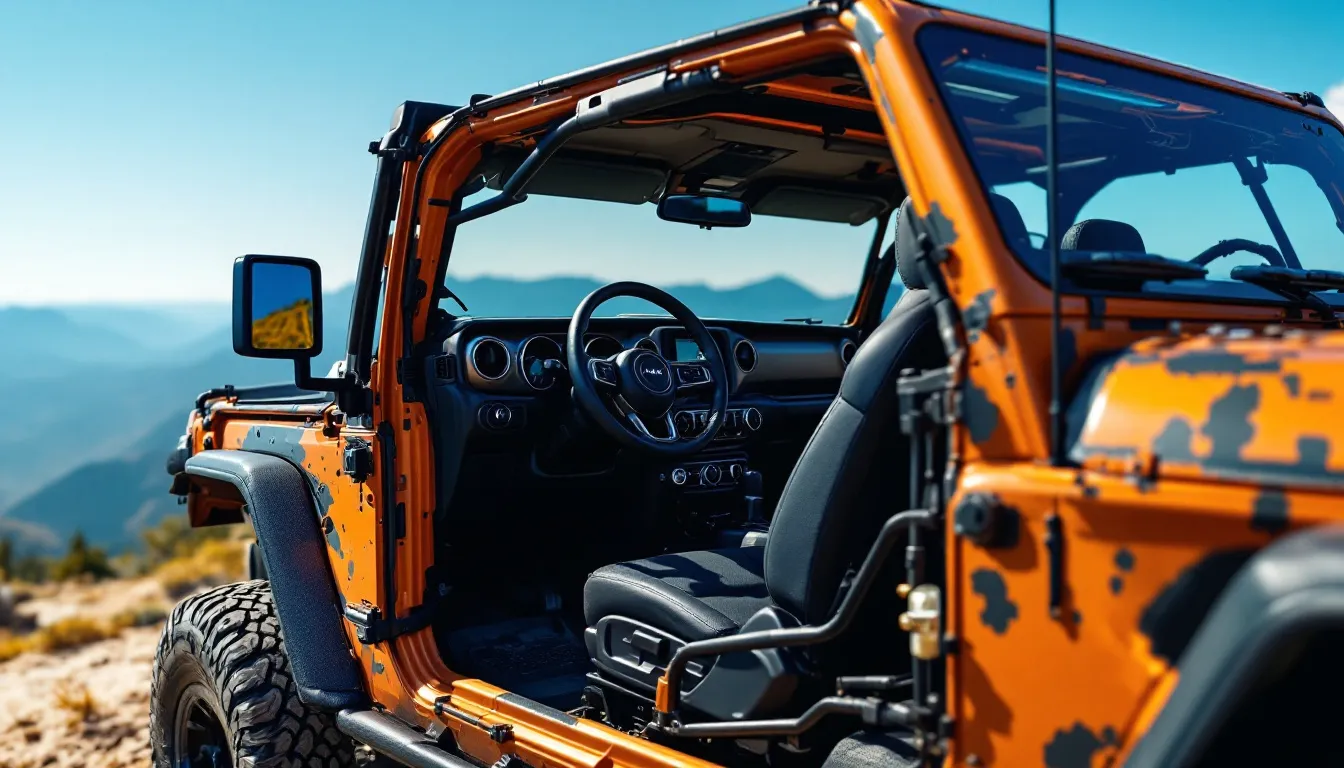
Driving doorless is legal in most US states, but mirror rules vary significantly by state. At the federal level, no law explicitly prohibits removal of Jeep doors. The question is whether your mirror configuration still satisfies state requirements once the doors are off.
Most states require at least two mirrors that give the driver a clear rear view: typically one on the driver's side and one either on the passenger side or the interior. When you remove JL doors, you lose the door-mounted mirrors. That leaves you with no side mirrors unless you've installed aftermarket mirror extensions or clip-on trail mirrors.
Several states, including California and Florida, require at least one external driver's-side mirror when the passenger side is unobstructed. Other states are more lenient. The variation is real and documented, but enforcement is inconsistent; your state's DMV is the only reliable source for current rules.
The practical answer: buy a set of mirror extensions or quick-release trail mirrors before you go doorless. They install in minutes and keep you street-legal regardless of where you drive. Quick-release trail mirrors on Amazon run $25-60 for a pair; it's cheap insurance. Keep your JL road-ready year-round by following the JL maintenance intervals to stay road-legal year-round.
Which Unspoken Jeep Rules Apply to Driving Modes and Transfer Case Use?
Your JL's transfer case has four positions: 2H, 4H, 4L, and Neutral. Using the wrong one for the conditions isn't just inefficient; it can damage your drivetrain.
2H (Two-Wheel Drive High): Use this on dry pavement for all normal driving. It's the default position for highway, city, and dry dirt roads. Most JL owners should be in 2H the majority of the time.
4H (Four-Wheel Drive High): Use this on slippery pavement, gravel, mud, sand, or wet roads where you need extra traction but don't need to slow your speed significantly. The common mistake: running 4H on dry pavement. This causes drivetrain bind on the JL's solid front axle setup and wears components prematurely. Shift out of 4H as soon as the surface clears.
4L (Four-Wheel Drive Low): Use this for slow, technical off-road situations: rock crawling, steep descents, deep mud, or any situation requiring maximum torque at low speed. You should be moving very slowly before engaging 4L.
Neutral: For flatbed towing only. Do not drive in Neutral.
Rubicon models add front and rear locking differentials. Engage the lockers only in genuinely technical terrain where wheel spin is a problem; running lockers on a clear trail limits your steering and stresses the axles. For a comparison of how the Willys handles these situations relative to the Rubicon, see the Willys trim's off-road capability compared to Rubicon.
Frequently Asked Questions
What is the history behind the Jeep wave custom? The Jeep Wave is believed to have originated with World War II military Jeep drivers acknowledging each other on the road. The tradition carried over into civilian Wrangler ownership and has continued through every generation, including the current JL. It's informal, community-maintained, and universally recognized among Wrangler owners. Always initiate. Failing to return a wave is considered poor form.
What driving mode should I use in different conditions? Use 2H on dry pavement, 4H on slippery or loose surfaces where you still need normal road speed, and 4L for slow technical off-road terrain. Never run 4H on dry pavement; it causes drivetrain bind on the JL's solid front axle and wears components prematurely. Use Neutral only when flatbed towing. Rubicon owners should reserve the lockers for terrain where wheel spin is an actual problem.
Is it legal to drive my JL without doors and mirrors? Removing doors is legal in most US states, but you typically need at least one or two mirrors to remain road-legal. State requirements vary, so check your state's DMV for current rules. Installing clip-on trail mirrors before you pull the doors is the simplest way to stay compliant. They run under $60 for a pair and take minutes to attach.
What are the unspoken rules around the wave hierarchy? The wave hierarchy is community-maintained, not official. Older and more modified Wranglers sit at higher priority. New JL owners should wave at all Wranglers and return every wave. Failing to wave back is considered poor etiquette. The custom applies specifically to Wranglers, not the entire Jeep lineup.
How does Duck Duck Jeep work? Duck Duck Jeep is a tradition where Jeep owners leave small rubber ducks on other Wranglers as an anonymous gesture of goodwill. Leave a duck on a stranger's Jeep, no note required, and the recipient is encouraged to pay it forward. The tradition started around 2020 and spread quickly across North America.
Do the unspoken Jeep rules apply to all Jeep models or just Wranglers? The core customs, especially the wave and Duck Duck Jeep, are Wrangler-centric. Gladiator owners are often included in the wave by courtesy, given the shared platform. Other Jeep models like the Grand Cherokee or Compass are generally outside the tradition, though there's no rule against being friendly.
The Rules Are Simple, the Community Is Worth It
The unspoken Jeep rules come down to three things: wave at other Wranglers, leave the trail better than you found it, and keep a rubber duck or two in the glovebox. None of these cost you anything except attention.
The wave connects you to a community that spans generations. Trail etiquette keeps everyone safe and preserves access for future runs. Duck Duck Jeep is just a good way to make someone's day without needing a reason.
If you're going doorless, get a set of trail mirrors sorted first. Quick-release trail mirrors on Amazon run $25-60 and keep you street-legal wherever you drive. For the trail, a basic recovery kit is worth having before you need it.
Still sorting out which JL trim fits your driving? The JL trim and options guide breaks down every variant. Weighing the JL against the truck platform? The JL vs Gladiator comparison covers the key differences. When you're ready to spec out your build, plan your JL mods and gear before you start buying parts.
The unspoken Jeep rules aren't a burden. They're what makes owning a Wrangler different from owning any other vehicle.