Introduction
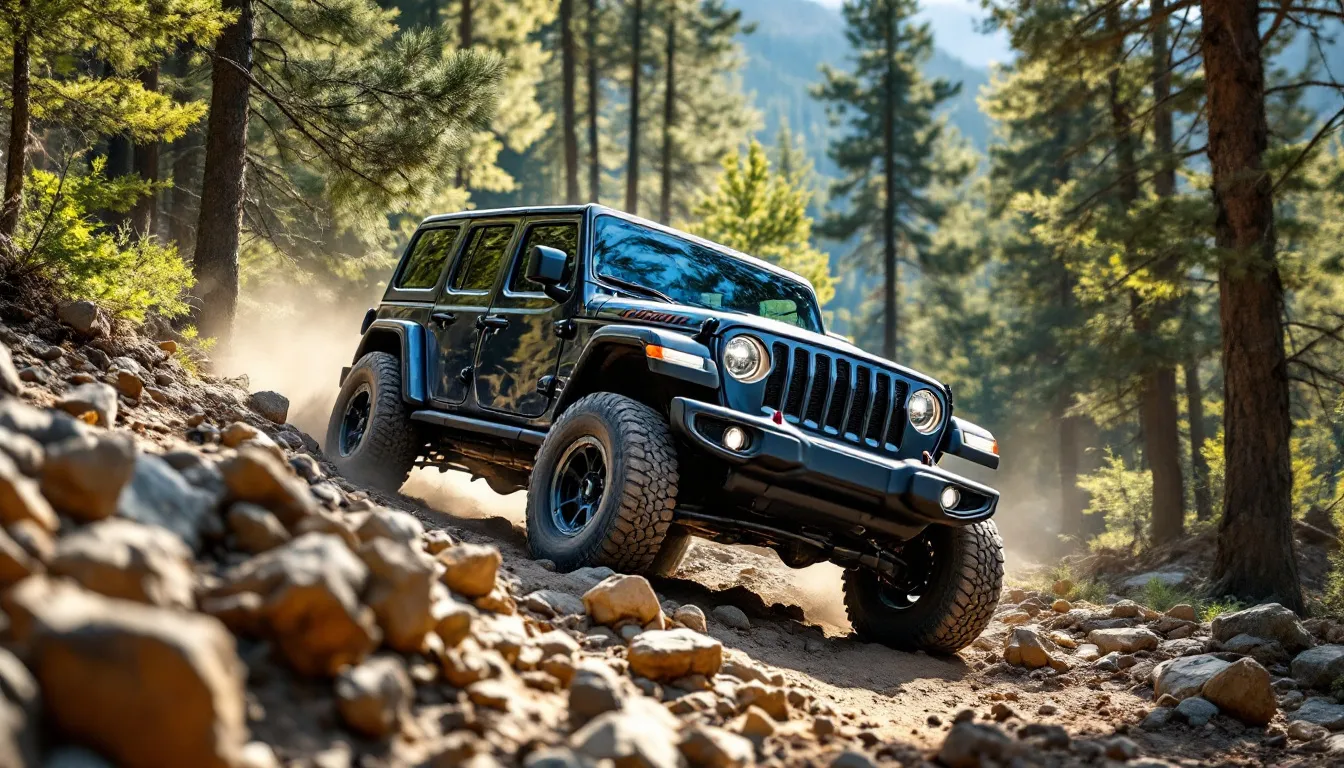
A stock Jeep Wrangler JL can handle real trails. Even a base Sport JL with its solid axles, 10.0 inches of ground clearance, and dedicated 4WD system is more capable off-road than most owners expect when they first take it into the dirt.
The difference between a solid first trail run and a frustrating one isn't about horsepower or whether you've installed a lift kit. It comes down to three things: understanding what your specific JL can actually do, picking a trail that matches your skill and equipment, and arriving with the right gear. All three are learnable before you leave your driveway.
This guide covers the essentials: stock JL capability across trim levels, how to find and read trail ratings, a practical pre-trail checklist, which accessories genuinely matter for trail use, and the recovery gear you should carry every single time.
Trim level makes a bigger difference than most people realize. The Rubicon ships with locking front and rear diffs, a disconnecting front sway bar, and 33-inch BFGoodrich KO2 tires from the factory. A Sport JL gets 4WD but none of those extras. See the JL trim breakdown to understand exactly what your build is starting with before you plan anything.
Can a Stock Jeep Wrangler Handle Off-Road Trails?
Yes. A stock JL handles the majority of trails a new off-roader will encounter. The solid front and rear axles, 30-degree approach angle, and 10.0 inches of ground clearance (9.7 on Sport) give genuine capability right from the factory. You don't need modifications to run most green and blue-rated trails.
Trim level matters though. The Rubicon is the factory off-road build: Tru-Lok locking front and rear axles, a front sway bar you can disconnect at the push of a button, steel 17-inch wheels, and 33x12.50R17 tires. This package handles rated 4-wheel drive trails without any mods. The Sport and Sahara run open diffs and 255/70R18 tires. They'll handle dirt roads and moderate trails but lose traction faster on loose rock and steep ledges.
The Willys edition splits the difference. It adds steel bumpers, rock rails, and 32-inch tires while keeping the Sport's axle hardware. If you're weighing trims for off-road use, understanding the Willys edition off-road hardware matters.
Most first-time off-roaders assume they need mods before they can do anything real. This is almost always wrong. The actual limiting factor on your first few trails is driver skill and trail selection, not the Wrangler itself. Owners running a stock JL Sport on beginner trails regularly report being surprised at what the rig can handle without any modifications at all.
The JL brought meaningful improvements over the JK: a wider track, a stiffer frame, better suspension articulation. How the JL compares to the JK off-road gives a clear sense of the generational jump if you're cross-shopping or building on experience with an older generation.
Off-road mode on the JL's Uconnect system adjusts throttle response, transmission shift points, and stability control to suit unpaved terrain. It requires no modifications to use. Press the terrain mode button, select "Off-Road Plus" on a Rubicon or "Mud/Sand," "Rock," and "Snow" modes on equipped trims, and the Wrangler's electronics optimize for that surface. Most owners don't realize these modes exist or assume they need upgrades to access them. They don't.
How to Find Jeep Wrangler JL Off-Road Trails Near You
Finding Jeep Wrangler JL off-road trails is simpler than new off-roaders expect. Apps like Gaia GPS, OnX Offroad, and Trail Hero all carry detailed trail data: difficulty ratings, GPS tracks, recent user reports, and photos. Start with OnX Offroad if you want a purpose-built off-road focus with active user reviews.
Pay attention to the difficulty scale when you're browsing. Most US trail databases use the Tread Lightly or Jeep Badge of Honor 1-10 scale. Some parks and OHV areas use the simpler Color Scale: green (easy), blue (moderate), black (difficult), and double-black (expert). For a stock JL Sport or Sahara, target green and easy-blue trails. A Rubicon with an experienced driver can handle blue and moderate blacks without mods.
The Jeep Badge of Honor program is worth knowing about specifically. Jeep has certified specific trails across the US: the Rubicon Trail in California, Uwharrie National Forest in North Carolina, Moab's area trails in Utah. Complete these trails, log them through the Uconnect-linked app, and you earn a physical badge. It's a structured way to work through increasingly challenging trails while building real skills.
For initial research, cross-reference the apps with the broader off-road community. The r/Jeep and r/WranglerJL subreddits have trip reports, trail condition updates, and regional recommendations. Local Jeep clubs are especially valuable because they know which trails have closed due to seasonal damage or access restrictions.
Before you commit to any trail, confirm these things:
- Current access status: Forest Service and BLM roads close seasonally or after weather events. Verify before you drive out.
- Trail length and time estimate: Don't underestimate. A 10-mile trail at 5 mph isn't two hours when you add obstacles, stops, and air-down time.
- Fuel range: Fuel consumption climbs on trails. Calculate your range conservatively and fill up before the trailhead.
- Cell service: Many trail areas have zero coverage. Download offline maps in Gaia GPS or OnX Offroad before leaving.
Uconnect 5 in newer JLs supports Apple CarPlay and Android Auto, so you can run trail navigation apps directly on the 12.3-inch screen via your phone if you prefer that over a dedicated GPS unit.
What Do You Need to Prep Your Jeep Wrangler JL Off-Road Trails Run?
Trail prep starts before the trailhead. Arriving with mechanical issues, under-inflated tires, or missing recovery gear turns a good day into a recovery operation.
Start with your steering components. Owners report death wobble — a rapid, full-wheel oscillation usually triggered above 45 mph — appearing on JLs with worn or loose track bars, tie rod ends, or ball joints. Death wobble is a safety issue. If you've felt any shimmy at highway speeds, inspect and replace worn steering components before the trail. Hitting an obstacle at trail speed on compromised steering can escalate fast. Check the JL maintenance schedule for component inspection intervals.
Next, check your skid plate coverage. The JL's factory skid plates protect the fuel tank and transfer case on Rubicon; Sport and Sahara have reduced coverage. Adding skid plates before trail runs is high-priority prep, not optional.
Full trail prep checklist:
- Tire pressure: air down to 18-22 psi for rock crawling, 25-28 psi for hardpack dirt. Bring a reliable gauge and compressor or CO2 system to re-inflate.
- Fluid levels: engine oil, coolant, brake fluid, axle diff fluid, transfer case fluid.
- Steering components: inspect track bar bolts, tie rod ends, and ball joints. Replace anything with play or wear.
- Brake inspection: pads and rotors wear faster off-road, especially on descents.
- Skid plate check: all plates bolted tight, no missing hardware.
- Lights: confirm all exterior lighting works, including any aftermarket fog or rock lights.
- Recovery gear: recovery strap, shackles, and either a hi-lift jack or portable air jack on board (see recovery section below).
- Fuel: top off before leaving. Many trailheads are far from gas stations.
- Communication: a handheld ham radio or satellite messenger (Garmin inReach) if cell service is absent.
- Spare tire: verify the JL's mounted spare is inflated to the correct pressure.
Tire selection matters significantly on trail. The JL's OEM tires on Sport trims are adequate for mild trails but lose traction fast on wet rock or loose shale. Many owners swap to an all-terrain or aggressive all-terrain tire before their first serious run.
Off-Road Accessories Worth Adding to Your JL
The first upgrade most JL owners consider is also the right one: protect the body and improve approach angles before adding anything else. The aftermarket Jeep accessories market is enormous, making it easy to spend money in the wrong order.
Here's a prioritized breakdown:
| Accessory Category | Why It Matters | Typical Cost Range | Priority |
|---|---|---|---|
| Aftermarket front bumper | Better approach angle, winch mount, D-ring recovery points | $250-$500 | Do First |
| Rear bumper with hitch | Rear recovery points, tow capacity, tail light protection | $250-$400 | Do First |
| Skid plates (full set) | Underbody protection on rock and debris | $300-$600 | Do First |
| All-terrain tires | Traction on loose rock, dirt, and mud vs. OEM street bias | $800-$1,400 (set of 5) | Do First |
| Recovery kit (strap, shackles, jack) | Self-recovery and assisting others | $150-$350 | Do First |
| LED light bar or pods | Visibility on night trails and in thick tree cover | $100-$400 | Do Later |
| Lift kit (2-inch budget level) | Larger tires, more clearance, improved flex | $400-$1,200 installed | Do Later |
| Winch (8,000-12,000 lb) | Self-recovery on serious terrain | $400-$900 | Do Later |
| Roof rack / gear storage | Gear organization for multi-day runs | $400-$900 | Do Later |
On tire and wheel selection: wheels and tire packages are NOT interchangeable without checking fitment. The JL's offset, bolt pattern (5x127), and backspacing requirements are specific. Running the wrong offset throws off suspension geometry and can contact body panels or steering components under flex. Check your rim offset and tire diameter against any suspension lift before ordering. The best all-terrain tires for the JL guide covers sizing and fitment in detail.
On electrical load: aftermarket LED lighting, a winch, and a compressor draw real current. A stock JL alternator handles light additions well, but running high-draw accessories simultaneously (winch under load plus lights plus compressor) can strain the system. Owners report managing load sequentially rather than all at once keeps things stable. Adding a dual battery setup or upgraded battery is worth considering if you're building a serious rig. Check JL skid plate options alongside bumper installs since both are often done at the same time.
A steel front bumper is one of the highest-impact single upgrades for trail use. It improves approach angle immediately, adds real recovery points (not cosmetic), and opens up winch mounting options. The Hooke Road Different Trail X Front Bumper provides excellent approach angle and mounting versatility for 2018-2026 JL models.

For the rear, a bumper with integrated D-rings and a hitch receiver gives you recovery and towing in one package. The OEDRO Rear Bumper with LED Lights combines protection with integrated lighting for visibility during trail operations.

A more compact rear option that doesn't sacrifice D-ring or hitch functionality:

Choosing the Right Aftermarket Bumper for Trail Use
An aftermarket bumper for trail use should do four things: improve your approach or departure angle, provide rated recovery points, accept a winch on the front, and survive a moderate rock strike without cracking. Tube-style steel bumpers typically use 3/16-inch or 1/4-inch steel wall thickness. Thicker wall means more durability but also more weight.
D-ring shackle mounts on quality bumpers are rated for 4.75 to 7 tons per point. Don't use D-rings on cosmetic bumpers that don't specify a load rating; the mount can fail under vehicle recovery loads. Most bolt-on steel bumpers install in 2-3 hours on the JL with basic hand tools and a floor jack to support alignment.
The combo bumper approach (front and rear matched set) saves money and ensures visual consistency. This set fits 2018-2026 JL models in both 2-door and 4-door configurations:

For a rear-only replacement that matches the Hooke Road front lineup, the Hooke Road Off-Road Steel Rear Bumper maintains JL-specific mounting points and incorporates clean hitch integration:

Steel bumpers add weight compared to the JL's plastic factory units. Count on 40-70 lbs on the front. That weight shifts the front axle load and can affect steering feel slightly. On a Rubicon with the front sway bar disconnected for articulation, this is largely negligible. On a Sport or Sahara running mostly moderate trails, the practical tradeoff is minimal given the recovery and protection benefit you gain.
Before buying any bumper, confirm it's compatible with your JL's year and door count. The 2-door and 4-door JLU share the same front mounting points, but rear bumper width differs between them.
Recovery Gear Every JL Owner Should Carry on the Trail
Recovery gear is what turns a stuck Jeep into a recovered Jeep. Every JL heading off-road should carry five core recovery items before worrying about anything else.
The five recovery essentials:
- Kinetic recovery rope (20-30 ft, 3/4 inch): Stretches under load to multiply recovery force. Rated for your Wrangler's weight. Never use a static tow strap for vehicle recovery.
- Shackles (bow-type, rated 4.75 tons or higher): Carry at least two. Connect strap to recovery points. Check the WLL (working load limit) stamped on the shackle body.
- Hi-lift jack or portable inflatable jack: Hi-lift jacks work on bumpers with lift points; air jacks work under the frame and require a compressor. Know which your setup supports.
- Traction boards (e.g., MAXTRAX or similar): Plastic boards that sit under a spinning tire to provide grip. Compact, light, and effective in mud, sand, and loose dirt.
- D-shackle rated soft shackles (2 minimum): Backup to steel shackles; safer to handle and quieter in a recovery situation.
On lighting: LED pods rated IP67 (fully sealed against water and dust) or better are the practical standard for JL trail lighting. Placement depends on terrain. Bumper-mounted pods work best for rock and tree terrain where overhead obstacles matter. Roof-mounted light bars give wider flood coverage on open desert and dirt roads. Many owners run both: a light bar for open runs and bumper fogs for technical rock crawling where you need light directly on the obstacle.
For organized gear storage inside the JL, storage solutions for trail gear keep recovery items accessible rather than buried under camping gear when you need them fast.
Frequently Asked Questions
These questions come up constantly from JL owners planning their first trail run.
Can a stock Jeep Wrangler handle the Rubicon Trail?
A stock Rubicon JL can handle the historic Rubicon Trail in California with an experienced driver. A stock Sport or Sahara would struggle on the most technical sections; several obstacles require locking differentials and significant wheel articulation. Modified Sport/Sahara JLs with lockers and 35-inch tires can complete it, but a factory Rubicon is the more appropriate stock-spec choice.
What does the off-road button do on a Jeep Wrangler?
The off-road terrain mode button adjusts throttle mapping, transmission shift patterns, and stability control thresholds to suit unpaved surfaces. On Rubicon models, "Rock" mode adds additional stability assist tuning and optimizes torque delivery for crawling. No modifications are needed to use these modes; they're fully functional on stock JLs as delivered from the factory.
What tires are recommended for off-road driving?
All-terrain tires like the BFGoodrich KO2, Falken Wildpeak AT3W, or Cooper Discoverer AT3 XLT are solid choices for mixed on- and off-road use. For dedicated rock crawling or mud terrain, an MT-rated tire performs better in technical conditions but wears faster on-road. See the all-terrain tire guide for the JL for sizing and fitment specifics.
Which lights are best for off-road use?
LED pods or light bars rated IP67 or higher are the practical standard for off-road use. Bumper-mounted pods are better for technical rock and wooded terrain where roof clearance matters. A roof-mounted bar gives broader flood coverage on open runs. Look for at least 3,000 lumens per pod and a beam pattern suited to your typical terrain (spot for distance, flood for close-in obstacles).
What accessories improve off-road capability the most?
In order of impact: all-terrain tires, locking differentials (if not already equipped), steel bumpers with recovery points, skid plates, and a winch. Tires deliver the most noticeable capability gain on a stock JL. Lockers are the single biggest functional upgrade for serious rock terrain. Bumpers, skids, and winches are protective and recovery-focused rather than traction-focused.
What parts should be upgraded for off-road builds?
A practical upgrade sequence: tires first, skid plates second, bumpers with recovery points third, suspension lift fourth (if running larger tires), and lockers fifth if the Rubicon's aren't already part of your trim. Many owners stop after tires and skid plates for moderate trail use. A full rock-crawler build progresses through all five stages.
Is a Jeep Wrangler suitable for long road trips?
Yes. The JL is a significantly more refined highway vehicle than the JK. The updated suspension reduces the high-speed vibration and wander that plagued older Wranglers. Owners report comfortable highway cruising up to 75-80 mph without significant fatigue. The 3.6L Pentastar's fuel economy (approximately 18-22 mpg highway in most reports) and the available eTorque 4-cylinder make it more practical for distance than the JK.
How do you fix death wobble in a Wrangler?
Death wobble in the JL is most commonly traced to a loose or worn track bar, tie rod ends, or ball joints. The fix is mechanical: inspect all steering and front suspension components for play, replace worn parts, and check that all torque specs are correct. Replacing the track bar and tie rod ends resolves the issue in most cases. A proper alignment after any steering component replacement is essential.
Planning Your First Jeep Wrangler JL Off-Road Trails Run
Your first Jeep Wrangler JL off-road trails run succeeds when you nail three basics: an honest understanding of what your stock JL can do, a trail matched to that capability level, and gear that lets you get unstuck without waiting for someone else. None of that requires spending thousands of dollars before you leave the driveway.
Stock JL capability is consistently underestimated. Green and easy-blue trails are well within reach of an unmodified Sport. The Rubicon trim opens up moderate-black terrain from the factory. The limiting factor on almost every first run is driver experience, not hardware.
As you build experience and identify what your build actually needs, upgrades make more sense. Some owners discover that all-terrain tires and a set of skid plates are all they'll ever need. Others end up building toward a full rock-crawler. Either direction is valid. Starting with a clear-eyed view of your current capability means you're not buying gear you don't need yet.
Check the full JL trim and options guide if you're still in the buying stage or want to benchmark your trim's factory specs against what's available. And if you're comparing JL options to an older JK, see how the JL compares to the JK before committing to a build direction.
For owners who want to map out their upgrades before spending anything, the JL Build Planner lets you plan your modifications in sequence so you're not doubling back on decisions you've already made.