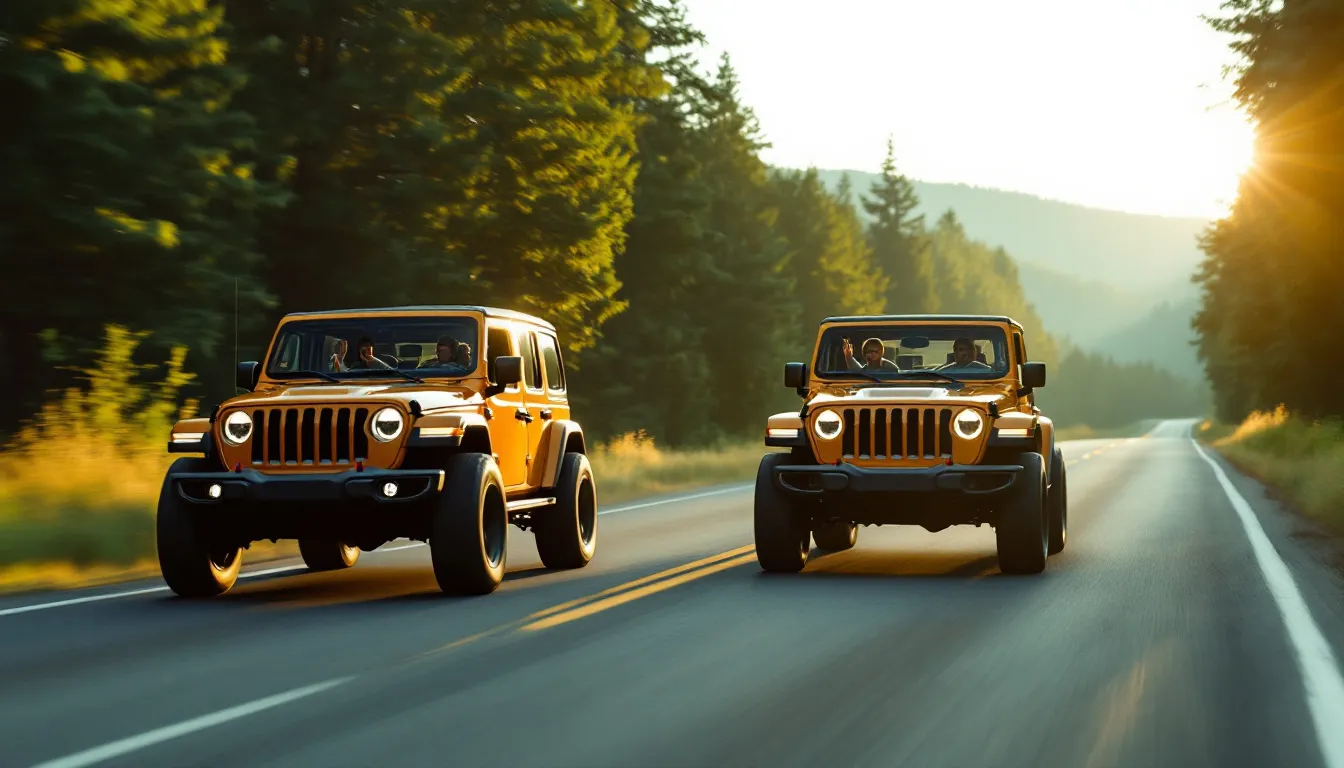
The unspoken Jeep rules are community norms that define how Wrangler owners acknowledge each other on the road, treat fellow Jeepers on the trail, and participate in traditions like Duck Duck Jeep. They aren't printed in any owner's manual, and no dealer explains them at handover. Yet break them and other owners notice. Follow them and you're immediately recognized as someone who gets it.
If you own a JL, you need to know these three pillars: acknowledge other Wranglers with the wave, follow strict trail etiquette, and participate in Duck Duck Jeep when you encounter it. They apply to every Wrangler owner, though the JL's modern features, larger buyer base, and newer community traditions add some nuance worth understanding before you hit the road.
The JL generation brought waves of new buyers who came to Wrangler ownership for different reasons than earlier generations. Many are daily drivers who never wheel. Others are serious overlanders. That mix has created debate in forums about whether the wave has diluted. The community consensus remains consistent: if you drive a Wrangler, you wave at other Wranglers.
Check the JL trim and year breakdown if you're still deciding which model fits your needs. This article covers every rule clearly, with no fluff.
What Are the Unspoken Jeep Rules and Why Do They Matter?
Wrangler ownership has historically signaled something beyond daily transportation. It shows a shared interest in off-road capability, a willingness to prioritize function over comfort, and membership in a community with its own norms.
The unspoken Jeep rules cover three areas: the wave on the road, trail etiquette when wheeling, and community traditions like Duck Duck Jeep. None are written down anywhere. All of them are enforced socially by other owners who notice when you get them wrong.
The wave itself is simple: a raised hand or a two-finger lift off the steering wheel as two Wranglers pass going opposite directions. Some owners do a full wave. Others keep it subtle. The acknowledgment is what matters, not the theatrics.
The tradition traces back to World War II-era Jeep ownership. The vehicles were rare enough that spotting another on the road meant something. As civilian Jeep ownership grew through the CJ, YJ, TJ, and JK generations, the wave carried forward as a community marker. It wasn't organized by any club or manufacturer. Owners simply kept doing it because it worked.
For context on how the JL differs from the JK in terms of community culture, the JL vs. JK breakdown helps explain some of the generational friction you'll encounter in forums discussing wave etiquette.
The Jeep Wave Hierarchy: Who Waves First
The owner with the older or more capable rig waves first. That's the rule. The logic is simple: the more dedicated your build, the more responsibility you carry to uphold the tradition.
A lifted, modified CJ on 37s doesn't wait for a stock JL to wave. The CJ owner waves first because they have more trail credibility and longer history with the culture.
| Jeep Type | Wave Priority | Notes |
|---|---|---|
| CJ (pre-1987) | Highest | Wave first, always. Vintage Wranglers carry the most credibility |
| YJ (1987-1995) | Very high | Square headlights, old-school cred |
| TJ (1997-2006) | High | Coil springs, widely respected generation |
| JK (2007-2018) | Medium-high | Huge owner base, strong community norms |
| JL (2018-present) | Medium | Stock wave; modified JLs move up the hierarchy |
| Gladiator | Medium | Shares JL platform; waved at by Wrangler owners, wave back |
| Cherokee/Grand Cherokee | Low | Not Wranglers; wave is optional, not expected |
New JL owners often wave at every Jeep badge they see. A Cherokee or Grand Cherokee doesn't automatically get the wave. The tradition is specific to Wranglers. Waving at a Grand Cherokee and getting nothing back isn't a snub; that vehicle simply isn't part of the same community.
Modified JLs move up the hierarchy because visible commitment to wheeling earns respect regardless of model year. A JL on 35s with a lift and armor signals something different than a stock soft-top commuter, and other owners read those signals immediately.
Curious about what sets certain JL builds apart from the factory? The Willys edition is worth understanding if you're considering one as a starting point.
Duck Duck Jeep: The Newer Tradition You Need to Know
Duck Duck Jeep is a tradition where Jeep owners place small rubber ducks on other Jeeps' door handles, mirrors, or hoods without leaving a note, as a random act of community friendliness.
The tradition started gaining traction around 2020, attributed to a Michigan Jeep owner named Allison Parliament who began leaving ducks on Jeeps in parking lots with the goal of spreading positivity. It spread rapidly through social media and Jeep groups. By 2026, it's mainstream enough that many owners carry ducks specifically to leave on other Wranglers.
The practical rules are loose by design. Leave a duck on any Wrangler you spot in a parking lot. No note required, though some owners attach a small tag explaining the tradition for new owners who might be confused. The gesture is anonymous and low-stakes.
If you find a duck on your JL, the expected response is simple: keep it, share a photo to a Jeep group or your social media, and ideally pay it forward by ducking someone else's rig. You don't have to participate. There's no enforcement mechanism here. But participating is how the tradition stays alive.
Keep a small supply of rubber ducks in your glovebox. A few dollars' worth from any party supply store means you're ready whenever you spot another Wrangler in a lot. Good storage solutions for the JL interior make it easy to keep a handful accessible without cluttering the cab.
What Are the Jeep Trail Rules? Off-Road Etiquette Explained
These unspoken Jeep rules on the trail start with one principle: don't be the reason someone has a bad day out there. Every specific rule flows from that.
Yield rules. On a single-track trail, the vehicle going uphill has the right of way. Downhill vehicles have more control and can reverse more safely than an uphill driver who may lose traction. Know this before your first trail run; getting it wrong causes real problems.
Never wheel alone. This isn't just cultural. A mechanical failure or stuck rig on a remote trail with no one else around can turn a bad day into a dangerous one. The norm is to run trails in groups of at least two vehicles. If you're new to a trail, connect with a local club run first.
Leave no trace. Stay on marked trails. Don't cut new lines to avoid an obstacle unless a trail marshal or experienced guide directs you otherwise. Cutting new lines destroys vegetation, causes erosion, and gives land managers reasons to close access. Trail closures affect every owner in the area, not just the person who made the bad call.
Gate protocol. If you open a gate, close it behind you unless it was already open when you arrived. Leave it the way you found it. Open gates allow livestock out; missed closed gates do the same. Ranchers and land managers notice, and access permissions depend on that relationship.
Recovery assistance. If you see another Jeep stuck on trail, you stop. Recovery assistance is a firm community expectation, not a courtesy. Even if you can't extract the rig yourself, you stay until the situation is handled or another capable vehicle arrives. Driving past someone stuck is one of the harder rule violations in terms of community trust.
Driving mode selection. 4H (4-wheel drive high) suits hardpack dirt roads, gravel, and light off-road at moderate speeds. 4L (4-wheel drive low) is for technical terrain, rock crawling, steep descents, and recovery situations where you need maximum torque at low speed. Running 4H on technical rock isn't just inefficient; it limits your control in situations where low-range gearing is the right tool.
Protecting your rocker panels on technical terrain matters before you need it. Gear like the Hooke Road 4-Door JL Tube Rock Slider Rails gives the JL's body a fighting chance on shelf rock and tight trail edges.

On Amazon and eBay
Hooke Road 4-Door JL Tube Rock Slider Rails Rocker Guard for
Check price on Amazon → See new and used on eBay →
See all current listingsPaid links. We may earn a commission from Amazon or eBay. Prices can change.
Good all-terrain tire options for the JL and skid plate options worth buying for trail use are both worth reading before your first real off-road run.
How the Unspoken Jeep Rules Apply to Wrangler JL Owners Specifically
The JL is the newest generation, and that affects how other owners read your rig and what they expect from you.
Owners report that the JL's larger sales volume means the wave return rate is somewhat lower than with older generations. More JL owners are daily drivers who bought the vehicle for its looks or utility, not for wheeling. That's not a criticism, just a reality experienced Jeepers factor in.
The JL's electronic aids, including the terrain management system and available front and rear lockers on the Rubicon, make it more capable from the factory than most people give it credit for. Stock JLs handle more than new owners expect. That said, the community norm is to know your rig's actual limits before you test them on trail. Running stock tires on technical terrain you're not ready for earns the same social friction as any other trail mistake.
Understanding known issues by model year matters. A well-maintained JL is a capable platform. Check the JL maintenance schedule to stay ahead of wear items and common wear points.
Building toward a trail-ready rig takes time. A rear bumper upgrade is one of the cleaner first steps, giving you a solid recovery point and D-ring mounts without major fabrication work.

On Amazon and eBay
OEDRO Rear Bumper w/ 2 LED Lights Fits for 18-26 Jeep
Check price on Amazon → See new and used on eBay →
See all current listingsPaid links. We may earn a commission from Amazon or eBay. Prices can change.
All the Unspoken Jeep Rules at a Glance
| Rule | When It Applies | What to Do | What to Avoid |
|---|---|---|---|
| Jeep Wave | Passing another Wrangler on the road | Raise hand or lift two fingers | Ignoring other Wranglers; waving at non-Wranglers expecting reciprocation |
| Wave Hierarchy | Any two Wranglers passing | Older/more modified rig waves first | Waiting for a stock JL to wave at a lifted CJ |
| Duck Duck Jeep | Spotting a Wrangler in a parking lot | Leave a rubber duck; keep one if found on your rig | Leaving a note with complaints; ignoring the tradition entirely |
| Trail Yield | Single-track with opposing traffic | Downhill yields to uphill | Assuming right of way without checking the grade |
| Never Wheel Alone | Any off-road run | Bring at least one other vehicle | Solo trail runs in remote areas |
| Recovery Assistance | Another Jeep stuck on trail | Stop and assist or stay until resolved | Driving past a stuck rig |
| Gate Protocol | Any gated trail access | Leave gates as found | Leaving a closed gate open or an open gate closed |
| Leave No Trace | All trail use | Stay on marked lines | Cutting new lines to avoid obstacles |
Frequently Asked Questions
Q: What driving mode should be used in different conditions? A: Use 4H for hardpack dirt, gravel, and moderate off-road at normal speeds. Switch to 4L for technical rock crawling, steep descents, deep mud, and recovery situations where maximum torque at low speed is required. On pavement, return to 2H (or AWD if equipped) to avoid drivetrain binding.
Q: Why do Jeep owners acknowledge each other on the road? A: The Jeep wave traces back decades to when Wrangler ownership was rare and implied a shared interest in off-road use and mechanical simplicity. Owners report it as a genuine community identifier, not just a gimmick. The tradition persists because new owners learn it quickly and most Wrangler buyers know the culture before they buy.
Q: Which Jeep models have reliability issues to avoid? A: The JL generation is generally considered solid, though specific model years have known concerns worth researching before you buy. Check the JL trim and year buying guide for a breakdown by year. Early JLs had some reported transmission and infotainment quirks that later model years addressed.
Q: What is the proper etiquette for the Jeep wave? A: Raise your hand or lift two fingers off the steering wheel as you pass another Wrangler going the opposite direction. The more modified or older rig initiates first. Missing a wave happens; it's not a crisis. Consistently ignoring other Wranglers is what earns a reputation.
Q: What unspoken rule applies when encountering another Jeep? A: The wave is the primary expectation. Beyond that, if you encounter a stuck Jeep on trail, stopping to assist is a firm community norm. In parking lots, leaving a duck on another Wrangler is a growing tradition that many owners now participate in.
Q: What constitutes proper Jeep community etiquette? A: Proper etiquette covers the wave on road, trail yield rules, never wheeling alone, recovery assistance, gate protocol, and leave-no-trace practices. Owners who follow these norms are recognized as trustworthy trail partners. Those who don't develop reputations that follow them in local communities.
Q: What are the rules governing Jeep ducking? A: Duck Duck Jeep has no formal rulebook. The practice is to leave a small rubber duck on another Wrangler's door handle or mirror in a parking lot, anonymously, as a friendly gesture. If you receive one, keep it and consider paying it forward. Keeping a few ducks in your glovebox means you're always ready.
The Rules Are Simple. Following Them Is the Hard Part.
The unspoken Jeep rules break down into three areas: acknowledging other Wranglers on the road, participating in community traditions like Duck Duck Jeep, and holding yourself to a higher standard on the trail. None of them are complicated individually.
The challenge is consistency. Waving every time, stopping for stuck rigs even when it's inconvenient, closing gates when you're tired after a long run. Community trust builds on those small moments adding up.
Trail access depends on owners behaving well collectively. One bad actor on a trail doesn't just have a bad day; they give land managers a reason to restrict access for everyone. That's the real stake behind etiquette that might otherwise seem like social formality.
If you're building your JL toward trail duty, the gear choices connect directly to how prepared you'll be to follow these rules in practice. A solid build starts with a clear plan. How the JL compares to the JK for community culture is worth reading before you commit to a direction. When you're ready to map out your modifications, plan your JL build to keep everything organized from bumpers to tires.